
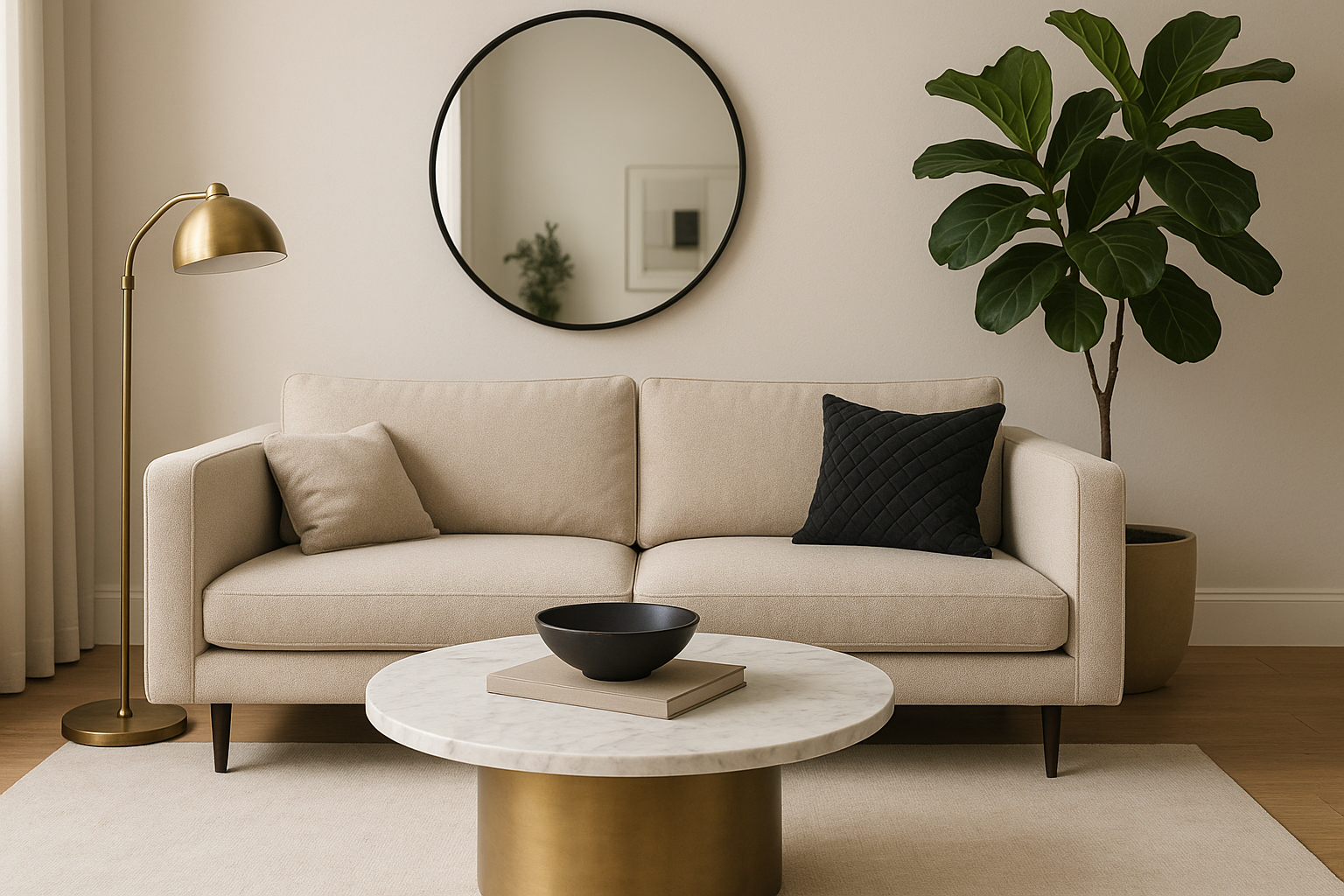
A celebrity living room can survive ten years of trend churn and still look current for one simple reason: the bones were right from the start. The sofa may have changed, the art may have rotated, and the rug may have been swapped out, but the room still works because the scale, materials, and lighting were chosen with care.
Contents
- What celebrity homes got right before “timeless” became a buzzword
- Neutral palettes with texture, not just beige-on-beige
- Statement lighting that does more than look expensive
- Why oversized art still makes a room feel finished
- Curved furniture and why hard edges finally took a back seat
- Natural materials that made luxury feel calmer
- Open shelves, curated displays, and the line between styled and cluttered
- Where most celebrity-inspired rooms go wrong
- What to try first
That’s the real appeal of celebrity home decor trends that still work today. The enduring ones solve practical problems while still looking polished on camera. They make a room feel larger, warmer, or more balanced without depending on one passing fad. How to Design a Home With Celebrity Style digs into that specific problem.
And if you’ve ever looked at an old Architectural Digest feature and thought, “Why does this still look good?” that’s usually why.
What celebrity homes got right before “timeless” became a buzzword
Long before “timeless design” became a styling phrase, many celebrity homes were already doing it well. The strongest rooms leaned on proportion, clean sight lines, and materials that aged well. They skipped the clutter of too many tiny decorative objects, which is a big reason they still feel fresh years later.
You can see it in homes with a single large sofa instead of several small seating pieces, or a bold pendant instead of a cluster of forgettable lights. Those choices create calm. They also photograph well, which matters in interiors designed to be seen in magazines, tours, and now social feeds.
The best part? These ideas translate easily to regular homes. You don’t need a mansion in Beverly Hills to use them. You just need to copy the principle behind them: choose one strong decision per room and let it do the heavy lifting.
Neutral palettes with texture, not just beige-on-beige
Celebrity interiors have leaned on neutral color schemes for years because they make rooms feel larger and easier to live with. But the versions that still work today rarely rely on flat paint and matching cream upholstery alone. They use texture to create depth. That trade-off gets a closer look in Celebrity Home Interiors That Shape Modern Luxury.
Picture a linen slipcovered sofa, a bouclé armchair, matte plaster walls, warm oak shelving, and a stone coffee table. That mix gives the eye enough variation to stay interested. A room like that feels calm, but it doesn’t disappear into itself.
This is also where many neutral rooms go wrong. If every surface is the same tone and sheen, the space starts to feel washed out. Warm undertones help, especially in north-facing rooms where cool light can make whites look gray. A soft greige wall with oak trim and a wool rug will usually feel far better than five shades of identical cream.
How to keep neutrals from feeling flat
Start by mixing at least three textures in one room. Linen, wood grain, and stone are an easy combination. Add one darker anchor such as walnut, black metal, or charcoal fabric so the room has contrast and doesn’t drift into sameness.
If you’re choosing paint, warm white, mushroom, taupe, and putty tones tend to age better than very cool gray. They also work with brass lamp bases, travertine tables, and natural fiber rugs like jute or sisal. Those materials have shown up in celebrity homes for years because they keep a neutral room from feeling sterile.
Statement lighting that does more than look expensive
Oversized pendants, sculptural chandeliers, and dramatic sconces have long been celebrity favorites. They still work because lighting changes how a room reads. It pulls attention upward, creates a focal point, and can make a plain layout feel intentional.
The trick is scale. A fixture should feel confident rather than random. In an entryway, a large pendant gives guests a clear first impression. Over a dining table, a well-sized chandelier makes the table feel anchored instead of floating awkwardly in space. In a bedroom, paired wall sconces can bring structure without adding clutter to nightstands.
This is one of those decor moves that looks luxurious even when the rest of the room is restrained. A sculptural light from Flos, Visual Comfort, or West Elm can shift the tone of a space fast. Unlike small decorative accents that get lost in the room, lighting earns its place every day.
Where statement lighting earns its keep
It works best in entryways that need an immediate focal point. It also shines in dining rooms, where the table deserves visual definition. Bedrooms benefit too, especially when layered with lamps or sconces that create softer evening light.
If you’re worried about committing to one large fixture, start with a room where replacement would be simple. A dining room is usually safer than a kitchen with tricky wiring or built-in cabinetry. You can go bold without making the project more complicated than it needs to be.
Why oversized art still makes a room feel finished
Large-scale art has been a staple in celebrity homes because it solves a common decorating problem: blank walls that make furniture look undersized. One big piece can give a room instant balance, especially in open-plan spaces where smaller art disappears visually.
The appeal hasn’t faded because the principle is sound. A single oversized canvas, framed photograph, or abstract print can anchor a sofa wall better than a crowded cluster of little frames. It gives the room one clear focal point and leaves breathing room around it.
This also helps avoid the “too many things competing” problem that plagues plenty of otherwise beautiful rooms. If your coffee table already has books and a tray, and your shelves hold ceramics and family photos, the wall art should calm the composition rather than add another layer of noise. One strong piece from a local gallery or a retailer like Saatchi Art can do exactly that.
Curved furniture and why hard edges finally took a back seat
Rounded sofas, arched chairs, crescent sectionals, and oval coffee tables have all had celebrity moments for good reason. They soften rooms that might otherwise feel rigid. In interiors filled with straight lines — windows, cabinetry, built-ins — one curved piece changes the mood fast.
Curves also guide movement more naturally. A rounded armchair feels more relaxed than an angular one in a conversational corner. An oval table takes up visual space more gently than a square block with sharp corners. That matters in smaller living rooms where every inch counts.
The tradeoff is practicality. Some curved furniture can be less efficient for seating or harder to fit against walls. So use curves where they have visual impact: a boucle accent chair near a fireplace, a rounded sectional in an open-plan den, or an oval pedestal table in an apartment dining nook. These pieces still look current because they address comfort as well as style.
Natural materials that made luxury feel calmer
Celebrity homes have long favored marble, travertine, wood, leather, and stone. What changed over time is how those materials are used. The versions that still hold up don’t look overly polished or precious; they feel tactile and grounded.
That shift matters. A honed marble countertop feels easier to live with than a mirror-gloss finish that shows every mark. An oak console brings warmth to an entryway without trying too hard. Travertine coffee tables show up again and again because their muted color and natural variation pair easily with almost any palette.
These materials last visually because they age with character. Leather develops patina. Wood picks up small marks that make sense in a lived-in home. Stone has variation built in, which means it rarely looks flat or generic. If you want one area where celebrity decor trends have aged especially well, this is it.
Open shelves, curated displays, and the line between styled and cluttered
Open shelving took off in celebrity kitchens and living spaces because it made rooms feel personal instead of clinical. It still works, but only if you edit it carefully. A shelf packed with random mugs, candles, and souvenir objects will look busy fast. A shelf with repetition and breathing room looks collected. Inside Celebrity Homes covers this in more depth.
The strongest examples usually mix books, ceramics, framed photos, and one or two sculptural pieces. Repeating colors helps too: cream ceramics beside ivory books; black picture frames beside a dark bowl; wood objects echoed by wood frames or cutting boards. That kind of rhythm makes open shelving feel deliberate rather than improvised.
This is where restraint pays off. Leave some empty space on each shelf so the eye can rest. If you’re styling kitchen shelving around everyday items from Crate & Barrel or CB2, group objects by shape instead of trying to display everything you own. Open storage can look elegant; it just asks for editing.
Where most celebrity-inspired rooms go wrong
The styles that last are usually simple at their core. The ones that fade tend to depend on one loud idea: mirrored surfaces everywhere, ultra-specific color schemes tied to a season, or furniture shapes chosen only because they photographed well once. Those looks can be fun for a moment, but they age quickly when they aren’t supported by strong proportions or durable materials.
A better approach is to borrow the structure of celebrity design without copying every detail. Use one standout light fixture. Choose textures over matching sets. Pick art large enough to hold its own on the wall. Let natural materials carry some of the visual weight. That’s how you get rooms that still feel good after the novelty wears off.
If you want to test whether a trend has staying power, ask whether it solves something practical: Does it improve scale? Does it soften hard lines? Does it add warmth? If the answer is yes, there’s a good chance it’ll still make sense years from now.
What to try first
If you’re updating a room this week, start with the easiest change: swap one small decorative piece for something bigger and more grounded. That could mean replacing several little frames with one large artwork from Minted or framing a single black-and-white photograph above the sofa.
Or pick one more tactile material and bring it into the room, an oak side table, a bouclé chair, a travertine lamp base, even a wool throw with visible weave. Small shifts like these keep celebrity-inspired interiors looking current without turning them into copies of someone else’s house.
Which room in your home would change fastest if you gave it one stronger focal point?