A 6 a.m. landing in Tokyo after an overnight flight from New York can feel absurdly unfair: your body wants sleep, the city is already moving, and by lunchtime you’re staring at a bowl of noodles with no idea whether it’s breakfast or dinner. That’s jet lag in real life. It happens when your internal clock falls out of sync with local time, and long-haul flights across multiple time zones usually make it worse.
In this article
- What jet lag actually feels like after a long-haul flight
- Why does jet lag hit some travelers harder than others?
- The 3 flight-day moves that make the biggest difference
- What to do on arrival when your body wants the wrong time
- Jet lag remedies that help a little — and the ones that don’t
- What a realistic jet lag plan looks like for your next long flight
The good news is that you can usually take the edge off. A few smart choices before departure, on the plane, and during the first day after landing can shorten recovery and keep the trip from turning into a foggy blur.
What jet lag actually feels like after a long-haul flight
Jet lag feels different from ordinary tiredness. You might be wide awake at 2 a.m. and then sleepy at 10 a.m. local time. Appetite gets strange, concentration drops, and simple tasks feel oddly hard. Some travelers also get headaches, stomach upset, or a heavy, off-kilter feeling that coffee doesn’t fully fix.
Long flights are especially rough because they usually combine sleep loss, dry cabin air, cramped seating, and abrupt time-zone changes. The farther you fly, the more your body has to catch up.
Why does jet lag hit some travelers harder than others?
The number of time zones matters most. A two- or three-hour shift is annoying; crossing eight, ten, or twelve hours can throw off sleep, hunger, and energy for days. Direction matters too. Eastbound travel usually feels harder because you need to fall asleep earlier than your body expects. Westbound trips often feel easier because staying up later fits the natural rhythm better.
Sleep before departure plays a big role as well. If you start a long flight already exhausted, your body has less room to cope. Age can matter too, since some older travelers adjust more slowly. And if your schedule on arrival is packed with meetings, family plans, or transit connections, you may have less control over light exposure, meals, and rest — which can slow recovery.
The 3 flight-day moves that make the biggest difference
Adjust your sleep before you leave
If you’re crossing several time zones, shift your bedtime and wake time by 30 to 60 minutes for a few days before departure. For eastbound travel, go earlier. For westbound travel, go later. Even a small change helps your body start moving toward the destination schedule before you board.
This is especially useful on overnight flights where every hour of sleep counts. If your trip is short, the effort may not be worth it. For longer stays, though, pre-shifting can save you from losing the first two days to jet lag.
Use light, meals, and hydration on purpose
Light is one of the strongest signals for your body clock. Get daylight when it matches the destination schedule and keep curtains open when you need to be alert. If you’re trying to adapt to local time, eat meals at local times too, even if your appetite feels off. Your body notices that rhythm.
Hydration helps as well. Airplane cabins are dry, and dehydration can make fatigue feel worse. Water is the obvious choice; electrolyte drinks can help if you tend to get headaches or don’t drink much on flights. Alcohol usually makes things worse by disrupting sleep quality and leaving you groggier. Heavy meals can do the same. There’s a fuller breakdown of this in Self-Guided Tours: Tips for Stress-Free Travel. (See also: Best Ways to Save Money While Traveling)
Choose your in-flight sleep strategy carefully
Don’t force a full night’s sleep on the plane if it doesn’t match your arrival plan. Sometimes a short nap is better than lying awake for hours.
If you land in the morning and need to stay functional until evening, aim for limited sleep on board so you can reset faster after arrival.
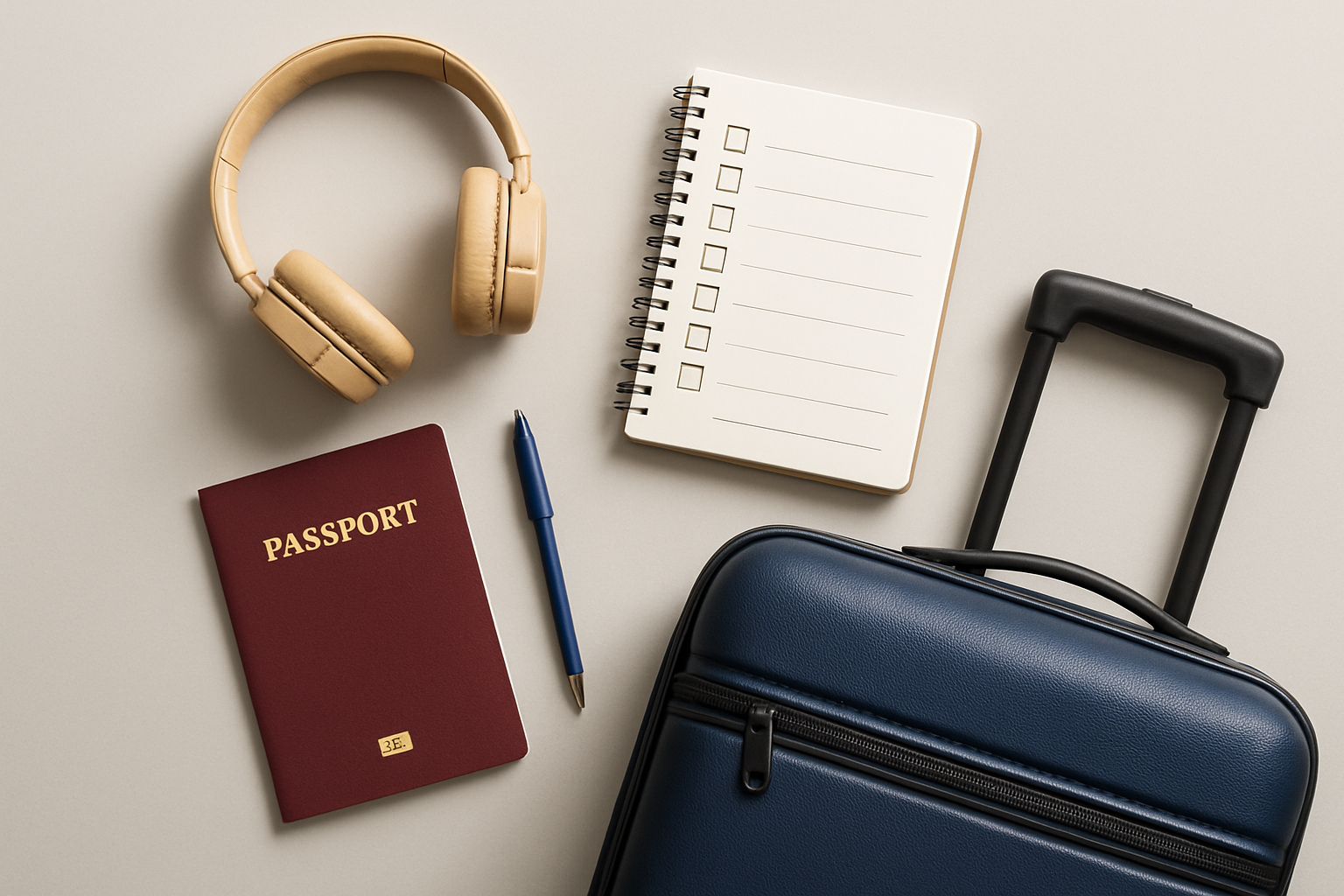
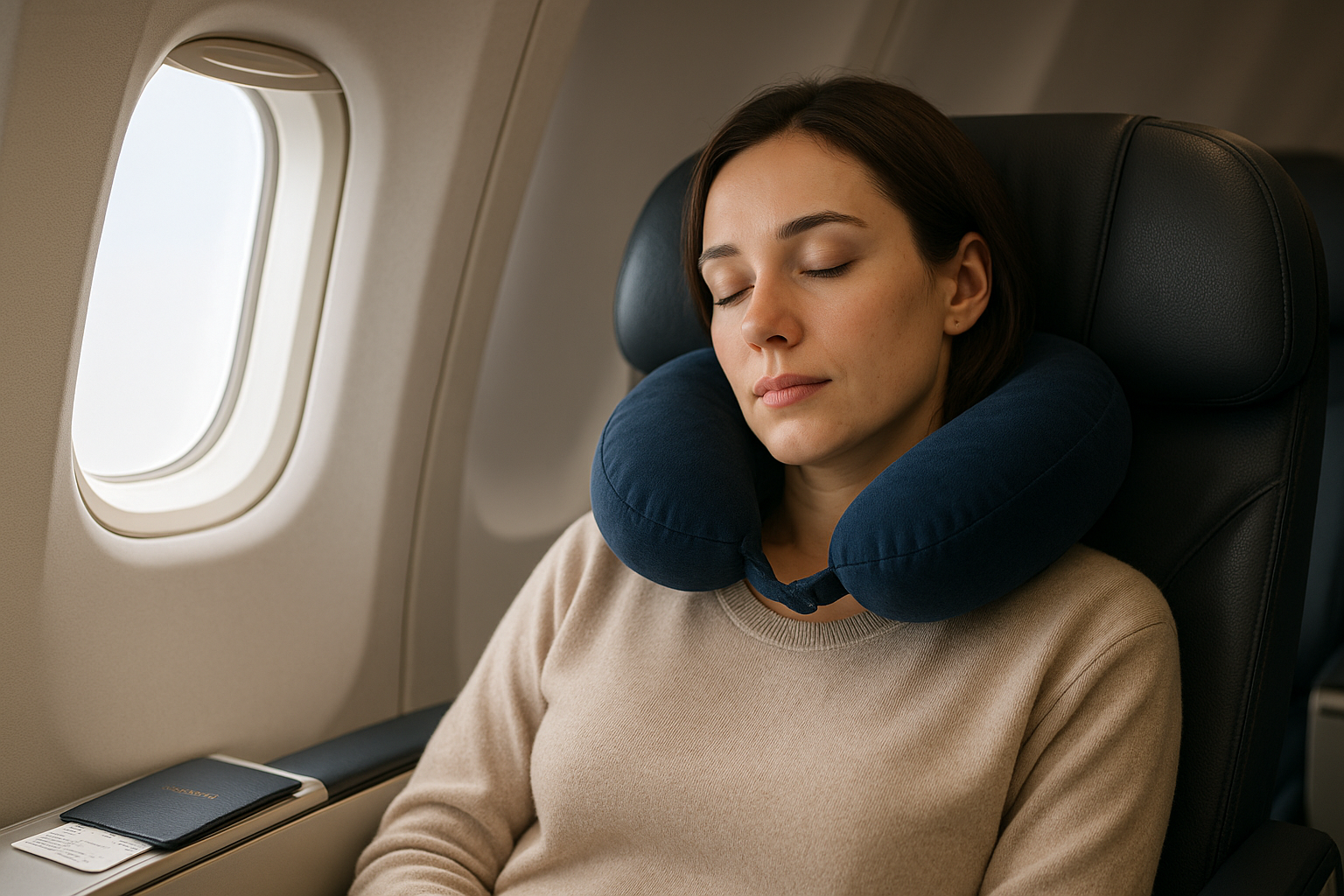
Small comfort items go a long way. An eye mask blocks cabin light. Earplugs or noise-canceling headphones cut down on interruptions, and Sony WH-1000XM5 and similar over-ear models are popular for a reason. A neck pillow can keep you from ending up in that painful half-sleep slump that leaves your shoulders wrecked. If you use caffeine at all, keep it earlier in the flight. Too much coffee late in the trip can make sleep harder when you finally want it. (We unpack that separately in How to Pack Light for Any Trip.)
What to do on arrival when your body wants the wrong time
The first 24 hours set the tone. Get outside in daylight as soon as you can, even if that’s just a walk around the block with your suitcase stored at the hotel. Eat on local time instead of whenever your stomach decides it wants food. Move gently: walk through the terminal, stretch in your hotel room, take the stairs instead of the elevator when it makes sense.
Long naps are tempting, especially after an overnight flight. Try to skip them unless you’re so exhausted you can’t function safely. A 20- to 30-minute nap can take the edge off; a three-hour nap usually makes the next night harder. The goal isn’t perfection. It’s to recover faster and keep jet lag from taking over the whole trip.
Jet lag remedies that help a little — and the ones that don’t
Melatonin can help some travelers, especially when it’s timed to support sleep at the destination. It’s often used for eastbound trips or to shift bedtime earlier. Timing matters more than dose size, so check with a clinician or pharmacist if you’re not sure how to use it.
Sleeping pills are different. They may help you fall asleep, but they won’t reset your body clock, and they can leave you groggy after landing. Caffeine has its place earlier in the day, especially if you need to stay awake through afternoon meetings or transit delays. It shouldn’t replace real sleep.
Alcohol is a poor fix for jet lag, even if a glass of wine on the plane feels relaxing for a minute. Random supplements are hit-or-miss too, and marathon sleeping after arrival usually backfires unless you’re truly recovering from severe sleep debt.
What a realistic jet lag plan looks like for your next long flight
A workable plan is simple: shift sleep before departure if the trip is long enough to justify it, use light and hydration with intent during the flight, sleep strategically instead of automatically, then lock into local time once you land. That sequence beats winging it every time.
Just as important, match the plan to the direction of travel and how long you’ll be away. A three-day business trip calls for a different approach than a two-week vacation in Singapore or Paris. Why fight your body clock without a plan when a few specific choices can make the first days feel much more usable?
Before your next long-haul flight, set one alarm to shift your bedtime by 30 minutes tonight.