
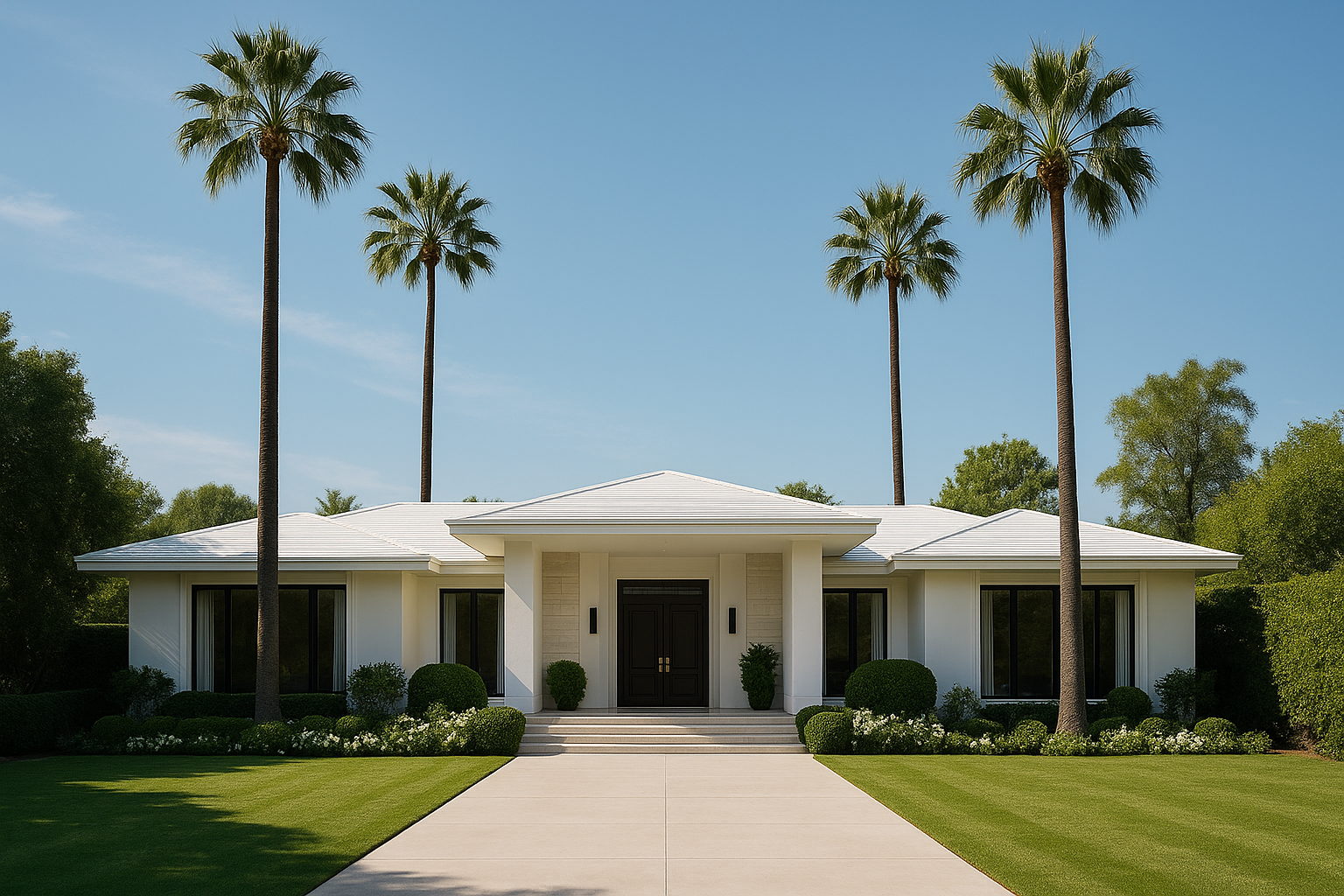
A visitor standing outside Graceland can often guess the story before they even cross the threshold. The pink stucco, the white columns, and the evergreen backdrop have become inseparable from Elvis Presley himself.
In this article
- How a front door became a cultural landmark
- Why celebrity houses keep outliving the celebrities who lived in them
- Graceland, Elvis Presley’s Memphis mansion, and the making of a shrine
- The White House effect: when a home becomes part of the national story
- What made Marilyn Monroe’s Brentwood home so haunting?
- Architectural style, status, and the image celebrities want to project
- The hidden cost of fame when the house is always on display
- Where the story lives next: tours, preservation, and pop culture memory
That’s the magic of iconic celebrity homes: they stop being private addresses and start functioning as public symbols. A front door, a staircase, even a strip of lawn can carry decades of gossip, grief, glamour, and carefully managed memory.
How a front door became a cultural landmark
Some celebrity homes are so recognizable that fans can identify them from a gate, a staircase, or a glimpse of landscaping alone. Think of the pink stucco of Elvis Presley’s Graceland, the white-columned elegance associated with the Kennedy family’s Hyannis Port compound, or the glassy modernism of many Hollywood hillside estates. These houses aren’t just real estate; they’re stage sets for public myth, private life, and sometimes scandal.
That’s why famous houses stay in the conversation long after the people inside them are gone. A home gives fame a physical address. It also gives fans something concrete to imagine: where the dinner parties happened, where letters were opened, where a career stalled or a marriage unraveled. In celebrity culture, architecture becomes biography.
Why celebrity houses keep outliving the celebrities who lived in them
A house can preserve a celebrity’s image long after films, albums, or interviews fade from memory. That’s part of the pull. Records crackle, movie roles date themselves, and magazine covers disappear into archives. A building stays put.
Visitors don’t usually show up for square footage. They want a sense of scale and intimacy. Which room held the piano? Was that where the family argued? What did the dining room sound like on a busy night? Those questions are part curiosity, part wishful thinking, and they explain why celebrity homes keep drawing attention decades later.
There’s also a deeper emotional appeal. A famous house makes public life feel close enough to touch. Fans can stand on the sidewalk and picture a person they’ve only seen on screen moving through a hallway or pausing at a window. That kind of proximity is rare, and it’s powerful.
Graceland, Elvis Presley’s Memphis mansion, and the making of a shrine
Graceland is one of the clearest examples of a celebrity home becoming something larger than itself. Elvis bought the estate in Memphis in 1957 when he was still very young and already turning into a national obsession. Over time, the house grew into a backdrop for his family life, his work, and his increasingly mythic public image.
After Elvis died in 1977, the property changed meaning almost overnight. What had been a private residence became a destination for fans who wanted to see where he lived, rested, ate, and played. Today Graceland operates as both museum and memorial, with tours, exhibits, gift shops, and rooms preserved to reflect a specific chapter of 1970s celebrity life.
The contrast is striking. One version of Graceland belonged to Elvis Presley the man; the other belongs to Elvis Presley the legend. That split helps explain its lasting power. Visitors come for memory, but they also come for atmosphere—the oddly intimate feeling of being inside a story they thought they already knew. For a deeper look at that side of it, see Inside Celebrity Homes.
From family home to tourist destination
After Elvis’s death, preserving the house mattered to fans and to his estate because demolition or major alteration would have erased too much history. The estate was opened to the public in 1982, and that move turned preservation into performance. The home had to remain recognizable while handling thousands of visitors every year.
That balancing act is harder than it looks. A house frozen too rigidly can feel lifeless; one changed too much loses credibility. Graceland has managed to keep enough of its original character to feel authentic while operating as one of America’s most visited private-home museums.
What the rooms still reveal
The Jungle Room is one of the best-known spaces in Graceland. Its carved wood furniture and dense tropical décor give it an unmistakable time-capsule feel. Other rooms point to Elvis’s love of music and performance: framed records, gold discs, and display cases that turn personal belongings into artifacts.
Some upstairs areas remain off-limits to the public, and that keeps a sense of privacy inside all that visibility. That partial access matters because it reminds visitors that even heavily toured homes still have spaces nobody gets to enter.
The White House effect: when a home becomes part of the national story
The Kennedy family’s Hyannis Port compound shows another path from residence to symbol. The Cape Cod setting is tied to summer photographs, sailboats, family gatherings, and the polished public image that came to define the Kennedys for generations. The compound is remembered less for luxury than for its place in political memory.
When a home appears again and again in news footage or family portraits, it picks up meaning fast. A porch becomes familiar. A lawn becomes part of the national visual record. In houses like this, domestic life and history overlap so closely that separating them feels impossible.
That’s one reason these properties stay in the public imagination. They suggest continuity across decades, even when the family story includes loss or tragedy.
The house itself seems to hold the memory together.
What made Marilyn Monroe’s Brentwood home so haunting?
Marilyn Monroe’s final home in Brentwood carries a very different kind of fame. It isn’t remembered for grand architecture or lavish interiors. People think of it because it feels intimate, quiet, and heavy with sadness.
The house has long been linked to her death there in 1962, which gives it a weight that bigger mansions sometimes lack. A modest-looking property can feel more unsettling than a palace because it suggests ordinary life interrupted by extraordinary loss. The front steps, driveway, and low-slung profile all add to that feeling. (Famous Celebrity Homes and Their Signature Style has the full walkthrough.)
Homes like this become iconic through absence as much as presence. Fans project meaning onto them because they want to understand the final chapter of a life that still fascinates them. That mystery keeps the house alive in cultural memory even when its original interior is gone or altered.
Architectural style, status, and the image celebrities want to project
Celebrity homes often reflect branding as much as taste. A sleek modernist house sends one message; a traditional estate sends another. Even before anyone steps inside, the architecture tells you something about how the owner wants to be seen.
Location matters too. A hillside glass house suggests seclusion and control. A sprawling property behind tall hedges suggests permanence and old-school status. A beachfront compound signals ease and access to leisure, while a restored historic mansion can imply seriousness or inherited prestige.
Modern minimalism versus old-world grandeur
Contemporary celebrity compounds often favor clean lines, open-plan interiors, floor-to-ceiling glass, and neutral finishes that photograph well on Instagram and in glossy shelter magazines like Architectural Digest. The message is controlled sophistication. Nothing looks accidental.
Traditional mansions tell a different story. Chandeliers, formal dining rooms, ornate moldings, and long driveways suggest continuity and curated glamour. They can also help celebrities tap into an older idea of success — one tied to permanence rather than trend cycles.
Why location matters as much as design
Beverly Hills, Bel Air, and the Hollywood Hills remain magnets because they offer status with distance. The addresses are famous on their own terms, and they also come with security gates, hidden drives, and enough elevation to keep prying eyes at bay. Coastal enclaves do something similar with ocean views and controlled access. There’s a practical example of this in What Makes Celebrity Homes So Fascinating?.
The neighborhood becomes part of the brand. A house in Trousdale Estates carries different associations from one in Malibu or Hancock Park, and that setting helps shape how people read the celebrity inside it.
The hidden cost of fame when the house is always on display
An iconic celebrity home can be a dream asset and a constant liability. The same visibility that makes it famous can also invite trespassing, paparazzi attention, obsessive fans, and endless drone shots over walls and hedges.
That pressure changes how people live in these places. Some owners install layers of protection: tall gates, security cameras, dense landscaping, motion lights, reinforced entryways. Others choose remote sites precisely because seclusion is part of the appeal. Either way, every decision about windows or fencing carries extra weight when strangers know your address.
There’s also an emotional cost that doesn’t show up on property listings. A house meant to feel like home can start feeling like an exhibit case. Some celebrities lean into public access through tours or charity events; others retreat further behind security lines. The same property can read as sanctuary or fishbowl depending on who’s standing outside it.
Where the story lives next: tours, preservation, and pop culture memory
Some celebrity homes become museums with timed tickets and guided walks through preserved rooms. Others remain private residences held by estates or families who manage their visibility carefully. And some survive mainly through photographs, film clips, coffee-table books, and social media posts that keep circulating long after the paint has changed.
That afterlife is part of what makes these homes so durable in popular culture. They turn fame into something physical, brick, wood, stucco, glass, which means people can picture history as a place rather than an idea. A house gives legend a floor plan.
If you want to explore this further, start with one address that fascinates you and compare how it appears in old magazine spreads, archive photos from Getty Images or Magnum Photos, and modern tour material from places like Graceland or historic-house foundations. You’ll notice how much of celebrity history lives in what survives around the edges: the driveway curve, the wallpaper pattern, the gate everyone recognizes before the name is even mentioned.