
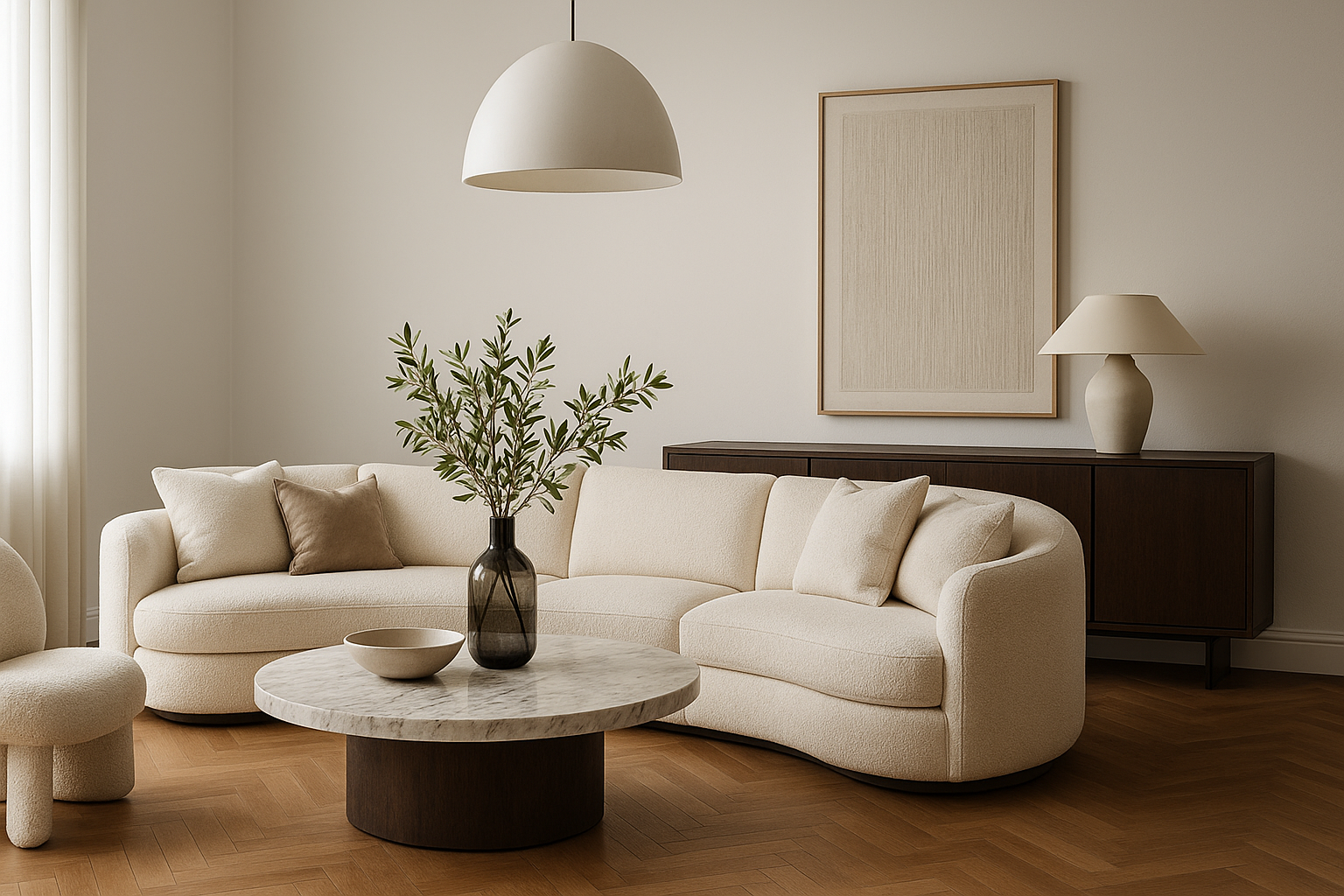
A marble coffee table, a sculptural sofa, and a room tall enough to swallow a standard chandelier can tell you a lot about where design is headed. Celebrity homes get photographed, reposted, and copied for a reason: they often offer the first clear version of what modern luxury looks like.
On this page
- When a Living Room Starts Looking Like a Hotel Suite
- Why celebrity homes keep setting the tone for luxury design
- Materials, finishes, and the quiet power of texture
- Open plans, statement rooms, and the new way space is used
- How celebrities use art, lighting, and scale to create drama
- What celebrity interiors get right, and what they don’t
- The real meaning of modern luxury in celebrity homes
When a Living Room Starts Looking Like a Hotel Suite
Think of the last celebrity home tour you watched: the double-height lounge, the sculptural sofa, the marble coffee table that looks more like art than furniture. Those rooms aren’t just expensive; they’re staged to feel calm, cinematic, and effortless. That’s exactly why celebrity home interiors keep showing up in design conversations. They shape what modern luxury looks like.
What’s striking is how often these spaces borrow from hospitality. Look at the lobbies at 1 Hotel or Aman properties: quiet palettes, generous seating, natural stone, and lighting that flatters at every hour. Celebrity homes use the same visual language, which helps explain why they feel instantly current. The effect is polished without feeling stiff.
Why celebrity homes keep setting the tone for luxury design
Celebrity interiors spread fast because they’re highly visible, heavily photographed, and usually designed by top-tier talent. When a home appears in Architectural Digest or on a widely shared Instagram reel, it becomes a reference point for sofa silhouettes, wall colors, and even the shape of a mirror. The appeal isn’t only exclusivity. It’s the idea that luxury can feel lived-in.
There’s also a practical reason these spaces influence broader design trends: celebrity homes often test ideas before they show up in mainstream interiors. A bold material, a new layout, or an unusual finish can feel risky in a conventional setting. In a celebrity home, it becomes aspirational. A Tadelakt plaster wall, a Pierre Yovanovitch-style curved chair, or a deep oxblood lacquer finish can move from niche to familiar surprisingly quickly.
That influence has a ripple effect. Furniture brands like RH and CB2 release lines that echo what people see in high-profile homes, while designers on platforms like Pinterest pick up the same cues and translate them for smaller spaces. Copying the look outright is rarely the point. What sticks is the mood.
Materials, finishes, and the quiet power of texture
Modern luxury is rarely about flashing logos or overstuffed ornament. It usually comes down to surface quality: honed stone, brushed brass, walnut paneling, boucle upholstery, and hand-applied plaster. These materials don’t shout, but they change how a room feels under light and touch.
Celebrity interiors often rely on contrast to create depth. A matte wall finish beside polished marble. A soft rug under a rigid glass table. Dark wood against pale linen. That mix gives a room dimension, and it’s one of the clearest lessons from high-end homes.
Stone, wood, and metal as a modern luxury trio
Many celebrity homes lean on this trio because it balances warmth and refinement. Stone adds permanence, wood brings softness, and metal introduces edge. Used together, they keep a room from feeling too cold or too ornate.
You’ll see this combination in everything from kitchen islands wrapped in Calacatta Viola marble to oak wall paneling with unlacquered brass hardware. Even small doses work. A travertine side table beside a walnut armchair can carry the same message without overwhelming the room. (More on this in Inside Celebrity Homes.)
Why tactile finishes matter more than decoration
In luxury interiors, texture often does the work that ornament used to do. A ribbed wall, a fluted cabinet front, or a velvet chair can make a space feel layered without adding clutter. That restraint is a big part of the celebrity-home effect.
This is also where restraint starts to feel practical. If every surface is competing for attention, a room can turn busy fast. Texture gives you interest without the visual noise, which is why hand-troweled plaster and mohair upholstery show up so often in celebrity spaces that are aiming for calm rather than flash.
Open plans, statement rooms, and the new way space is used
Celebrity homes often favor open layouts, though not always for the reason people assume. It’s about flow. Large connected spaces create natural sightlines, give a room a clear focal point, and make everything feel easier than a more formal layout would.
At the same time, the best celebrity interiors usually include at least one room that breaks the pattern: a moody library, a media lounge, a dressing room, or a wellness space. That contrast matters. If everything is open and airy, a home can lose its sense of intimacy.
Luxury today often means knowing when to close a door.
There’s also a smarter planning move behind many of these homes: zoning within openness. A long sofa can define a conversation area; an oversized console can separate dining from lounging; a screen by Soho Home can soften sightlines without blocking them completely. The result feels curated, not overdesigned.
How celebrities use art, lighting, and scale to create drama
Scale is one of the most visible tools in celebrity home design. Oversized art, large pendant lights, and generous furniture proportions help a room feel intentional. Small pieces can look tentative in a grand space; larger ones read as confident.
Lighting does even more work than people realize. Layered lighting — recessed, ambient, and sculptural — lets a room shift from daytime brightness to evening intimacy. That flexibility is a hallmark of modern luxury. A home should look good in photos, sure, but it also has to feel right at 8 p.m. with the lights low and the mood changed.
Art also plays a defining role. Rather than filling walls with decorative extras, celebrity homes often use one or two strong works to anchor a room. A large-scale canvas by Mark Rothko may be out of reach for most people, but the idea is easy to adapt: choose fewer pieces with more presence. A framed photograph by Wolfgang Tillmans or an abstract print from Uprise Art can do far more than a wall full of small decor objects.
The same logic applies to mirrors and lighting fixtures. A giant oval mirror above a console or an Art Deco-inspired pendant over a dining table changes how the whole room reads. You notice the gesture before you notice the objects around it.
What celebrity interiors get right, and what they don’t
The strongest celebrity homes understand restraint. They don’t overload every surface. They repeat materials thoughtfully. They leave breathing room. That’s why they feel luxurious instead of merely expensive.
Still, some celebrity interiors are hard to translate into everyday homes. Extremely large furniture, highly customized finishes, and museum-like minimalism can feel impractical outside a sprawling property. The lesson isn’t to copy the whole look. It’s to borrow the principles: balance, texture, scale, and a clear point of view.
There’s also a downside worth naming: some of these homes are designed for cameras as much as for daily life. White bouclé everywhere looks beautiful until someone walks in with wet denim or red wine in hand. Open shelving photographs well until dust becomes part of your weekly routine. Luxury works best when it can survive real use.
Where the look becomes less livable
Too much glass, too many delicate finishes, or rooms designed purely for photos can fall flat in real life. The best homes still need storage, comfort, and durability. A handsome lacquer finish on every cabinet may look dramatic on screen; fingerprints will have another opinion.
What translates well into everyday interiors
- Neutral layering with cream, taupe, charcoal, and warm white.
- Better lighting through dimmers and mixed sources like floor lamps and sconces.
- One statement piece per room instead of crowding everything at once.
- Upgraded materials where hands actually touch surfaces: hardware, countertops, upholstery.
- More breathing room around furniture so layouts feel intentional.
The real meaning of modern luxury in celebrity homes
Modern luxury isn’t about showing every expensive thing you own. It’s about making a space feel composed, personal, and quietly elevated. Celebrity home interiors have pushed the idea away from excess and toward atmosphere, craftsmanship, and control.
That shift shows up in details ordinary buyers can use too: flush baseboards instead of chunky trim, integrated appliances instead of visual clutter, linen drapery that pools slightly on the floor rather than stopping short. Even something as simple as swapping chrome for aged brass can change the tone of a room.
If you want the look without turning your home into a set piece, start with one room and edit hard. Choose one material story, one strong light source, and one focal object that earns its place. Which space would you try first?