
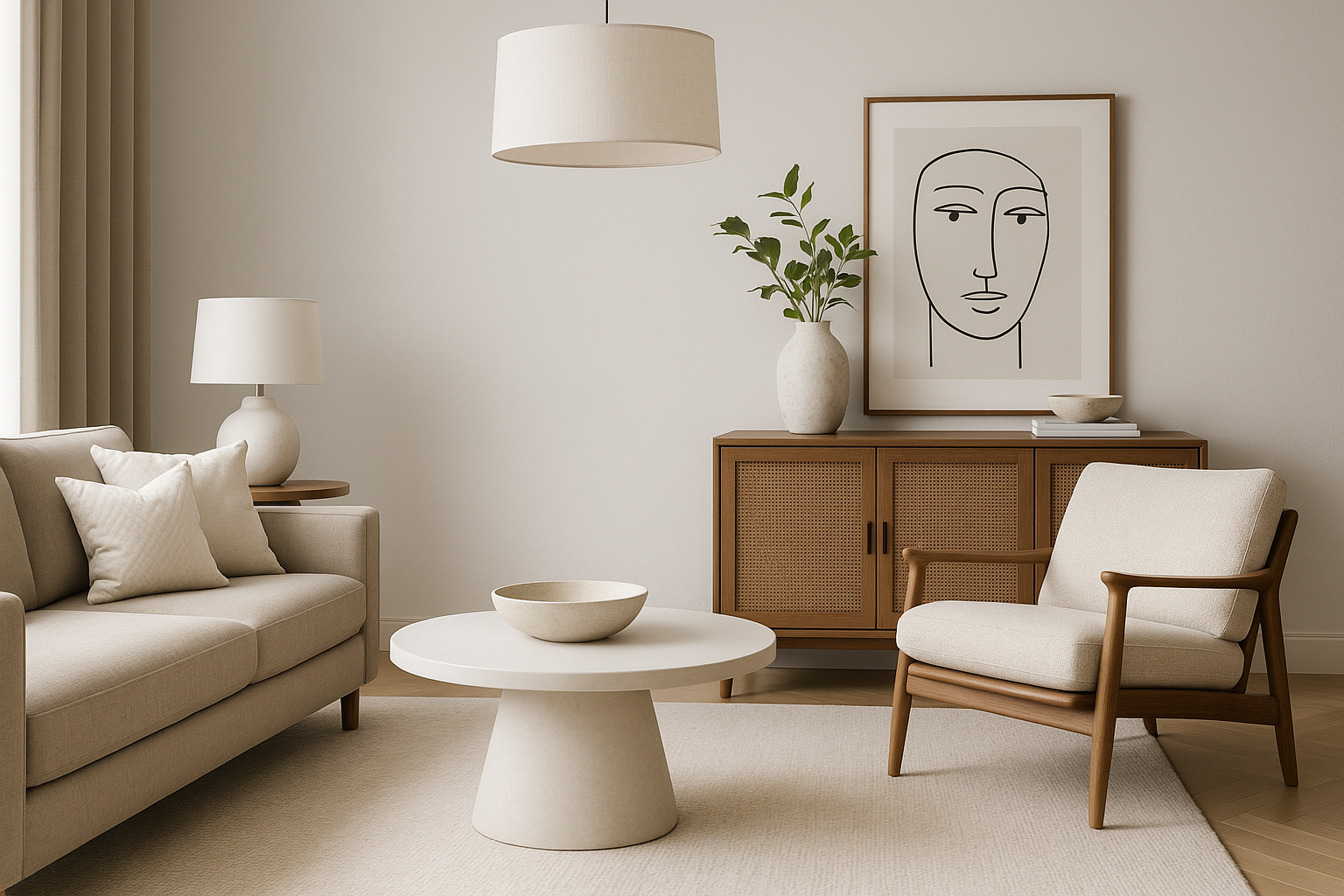
A client once pointed to a living room with a floor-to-ceiling marble fireplace, a 9-foot sofa, and one oversized black-and-white photograph and said, “Why does this look finished when mine doesn’t?” The answer usually isn’t a bigger budget. It’s a tighter set of choices.
What this covers
What celebrity homes actually get right
Celebrity interiors often look effortless because they stick to a few repeatable design moves: a strong focal point, an edited color palette, and one or two statement materials. The look comes from deciding what to emphasize, then leaving everything else quiet enough to support it.
The appeal is polish with personality. A well-styled celebrity-inspired room feels curated, but it doesn’t feel crowded. You notice the sculptural lamp, the velvet sofa, or the lacquered side table before you notice everything else, which is exactly why these rooms photograph so well.
That’s also why copying a celebrity home room for room rarely works. What works is borrowing the underlying principles: edit hard, repeat a few materials, and give the eye one clear place to land.
The room-by-room formula that makes the look work
Celebrity-inspired styling works best when you adapt it to each space instead of applying one aesthetic everywhere. A dramatic living room, a softer bedroom, and a pared-back entryway all need different levels of contrast and detail. The common thread is intention.
Living rooms: anchor the space with one standout moment
Living rooms in celebrity homes often rely on one anchor that gives the whole room presence. That might be an oversized abstract painting, a sculptural chandelier from brands like Visual Comfort, a curved sofa, or a coffee table in stone or smoked glass. Once that piece is in place, everything else can support it.
If your room is small, resist the urge to add several hero objects. One bold move usually looks stronger than three competing ones. A deep green velvet sofa, for example, can carry the room if the rug, curtains, and side tables stay quieter.
Bedrooms: keep the palette softer, but still intentional
Bedrooms tend to work best with layered bedding, low-contrast tones, and tailored upholstery. Think washed linen sheets from brands like Parachute or Coyuchi, an upholstered headboard in bouclé or soft gray linen, and matching bedside lamps to create calm symmetry.
The room should feel restful, but not bland. Use subtle variation: cream against oatmeal, warm white against pale taupe, matte ceramic against brushed brass. That mix gives the room depth without making it feel busy before bed.
Entryways and small spaces: create impact fast
Small spaces are where celebrity-home styling can be most effective. A slim console table, a mirror with an interesting shape, and one decorative object — maybe a stone bowl or a vase with branches — can make an entryway feel considered in minutes. Good lighting helps too; wall sconces or a small table lamp can make even a narrow hall feel intentional.
The trick is restraint. If the space is tight, every item needs a job. A mirror opens up the room, the console gives structure, and one object gives character. That’s enough.
Materials and finishes that make a room feel expensive
Certain materials show up again and again in celebrity interiors because they read as rich to the eye and pleasant to the touch. Velvet catches light beautifully. Marble brings pattern and weight. Brushed metal feels more relaxed than polished chrome. Natural wood keeps things grounded. Linen and bouclé soften sharper lines.
Mixing finishes matters just as much as choosing them. A glossy lacquer side table beside a matte wool rug creates contrast without noise. Too many shiny surfaces can make a room feel cold; too many flat ones can make it feel dull.
Repeating one or two finishes in different places often looks more luxurious than scattering six different materials around the room.
- Glossy + matte: Pair a lacquered cabinet with linen drapes or a marble tray on a wood console.
- Repeat key materials: Use brushed brass in two or three places instead of switching between brass, chrome, and black metal.
- Match finishes to light: Dark rooms can handle reflective surfaces; bright rooms often suit matte plaster, oak, or textured fabric.
Color stories that feel polished, not flat
Restrained palettes show up often in celebrity homes because they let form and texture do more of the work. Warm neutrals with black accents. Soft creams with deep green. Pale walls punctuated by one saturated chair or artwork. The room feels composed because the colors are doing less, more clearly. (See also: Inside Celebrity Homes)
A polished palette also depends on contrast. Without it, even expensive furnishings can look washed out. With it, a modest room can feel editorial. There’s a fuller breakdown of this in How to Design a Home With Celebrity Style. The longer version of this argument is in Famous Celebrity Homes and Their Signature Style.
Neutral rooms with depth
A beige room goes flat when every surface shares the same undertone and sheen. To fix that, vary the temperature of the neutrals slightly: ivory curtains, camel leather, oatmeal upholstery, and a stone or clay accent piece. Add texture through ribbed ceramics, nubby upholstery, or a wool rug with visible weave.
You can also use shadow to your advantage. A matte wall paint next to satin-finish trim, or a boucle chair beside a smooth walnut table, creates enough variation to keep the eye engaged.
When a bold color actually helps
One strong color can define a room quickly. Navy works well in libraries and bedrooms. Emerald suits velvet upholstery and darker wood tones. Oxblood adds richness in smaller doses, especially on a chair or lamp shade. Camel reads warm and tailored when used on leather seating or cushions.
The key is containment. A single bold chair in an otherwise quiet room often feels more confident than painting every wall bright blue. The color has room to breathe.
Where most celebrity-inspired rooms go wrong
The most common mistake is copying trends without editing them for scale, light, or how you actually live. A huge chandelier that looks perfect online can overwhelm an eight-foot ceiling. A low-slung sofa may look great in a loft but feel awkward in a family room where people need somewhere upright to sit. Style has to fit function.
Over-accessorizing causes trouble too. If every surface has candles, books, vases, trays, and framed art leaning everywhere, the room loses its focus. The same problem shows up when finishes clash, brass next to chrome next to matte black can feel accidental unless there’s a clear plan behind it.
- Too many statement pieces: One dramatic object is memorable; four of them compete.
- Poor proportion: Oversized furniture can crowd small rooms, while tiny rugs make even good furniture look lost.
- Themed décor: Rooms built around a Hollywood idea can feel staged if they lack everyday objects and comfort.
How to edit the look for your budget and your home
The most convincing celebrity-style rooms usually come from editing rather than excess. Start by looking at one room you love, on Pinterest, Instagram, or in an interior magazine like Architectural Digest, and identify the features that repeat: maybe curved seating, pale walls, brass accents, and one large artwork. Those are the parts worth borrowing.
- Pick a reference room and identify its three most repeatable features.
- Choose one anchor item, such as lighting, a rug, or a sofa.
- Repeat colors and materials so the room feels cohesive.
- Remove anything that adds clutter without adding character.
If your budget is tight, start with paint, lighting, or textiles before replacing furniture. New lamp shades from House of Hackney or simple linen curtains can shift the mood faster than buying everything new. Even swapping generic hardware for unlacquered brass knobs on a dresser or cabinet can change how finished a room feels.
This approach scales easily. Whether you’re styling a rental apartment or updating a house with strong original details, you don’t need to copy someone else’s square footage to get the same effect. Pick one focal point this week, maybe the sofa wall, maybe the entry mirror, and make that area feel unmistakably intentional.