
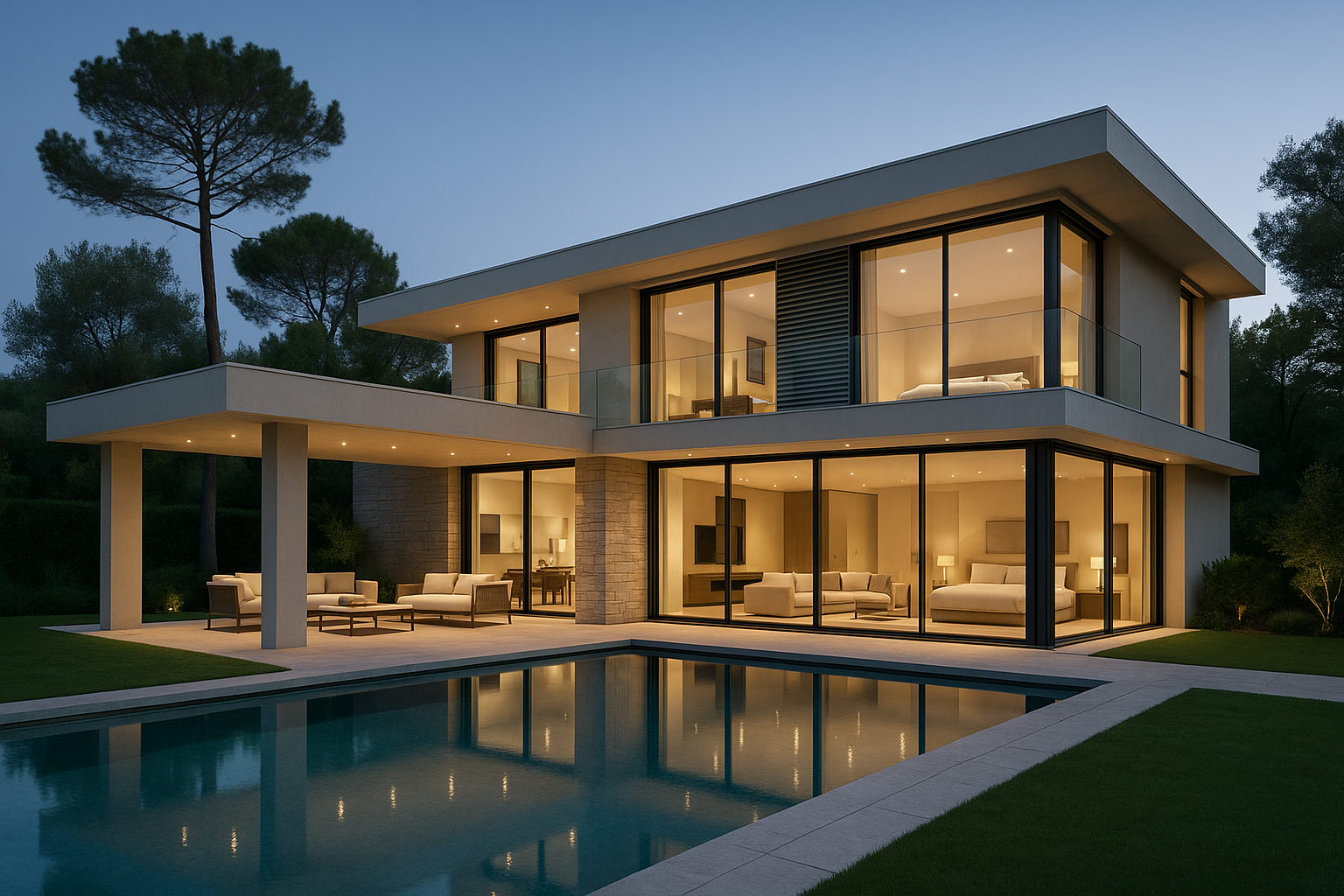
A Los Angeles estate can sell for tens of millions, and people rarely notice the square footage first. They notice the cinema room with tiered seating, the glass-walled gym, the infinity pool, and the kitchen that looks made for a magazine cover shoot. Luxury celebrity homes have become shorthand for premium living, where design, privacy, and convenience all get the full budget.
Contents
- Why celebrity homes keep setting the standard for luxury buyers
- The features buyers notice first in a celebrity-level home
- Privacy and security: the non-negotiable luxury
- Indoor-outdoor living and the resort effect
- Entertainment rooms buyers actually use
- What if the kitchen is the real status symbol?
- Wellness amenities are no longer optional
- Custom details buyers remember long after the tour
- Why developers pay attention to celebrity-home trends
- What buyers should focus on before falling for the glamour
That matters because these properties do more than make headlines. They shape what affluent buyers ask for, what architects sketch into new builds, and which features help a listing stand out in a market where every house claims to be exceptional.
Why celebrity homes keep setting the standard for luxury buyers
Celebrity homes tend to work as trend amplifiers. A detail that might feel extravagant in a normal property—say, a hidden bar behind a bookcase or a primary bathroom with double showers—starts to feel expected once it appears in enough high-profile listings. Buyers who tour enough estates begin to notice patterns, and those patterns often spread into custom builds in Beverly Hills, Miami Beach, Malibu, and the Hamptons.
The appeal is partly visual. These houses are staged to photograph well from every angle, whether that means floor-to-ceiling Fleetwood doors opening onto a terrace or a limestone fireplace framed by custom millwork. But it’s also practical. The best celebrity homes solve everyday problems in polished ways: they hide service traffic, keep guests comfortable, and make entertaining look effortless. That mix of showpiece and function is exactly what luxury buyers respond to.
The features buyers notice first in a celebrity-level home
Luxury rarely comes down to one dramatic feature. It’s usually the combination of privacy, scale, craftsmanship, and convenience. Celebrity homes push those qualities further than most properties, which is why they influence the wider market so strongly.
- Privacy and security, gated entries, long driveways, high walls, advanced surveillance, and layouts that block direct sightlines.
- Indoor-outdoor living, retractable glass walls, covered terraces, resort-style seating areas, and pools that connect visually with the main living space.
- Entertainment spaces, screening rooms, bars, game lounges, recording studios, and private club-style rooms tucked inside the home.
- Statement kitchens and primary suites, oversized islands, chef-grade appliances, spa bathrooms, and dressing rooms that feel closer to boutiques than closets.
- Wellness amenities, gyms, saunas, cold plunges, meditation rooms, and massage spaces that turn daily routines into something more private and controlled.
Privacy and security: the non-negotiable luxury
For celebrity buyers, privacy isn’t an upgrade. It’s the starting point. A property can be beautiful and still fail in this category if neighbors can see too much of the pool deck or if paparazzi can linger at the curb with a telephoto lens. That’s one reason elite homes often sit behind layers of defense rather than one obvious gate.
Common solutions include controlled access points, discreet cameras, smart locks, perimeter lighting, and landscaping that softens visibility without making the place feel like a bunker. Mature hedges, masonry walls, angled driveways, and carefully placed trees all help. Buyers want calm. They don’t want to feel watched while they’re having coffee on the terrace.
How privacy shows up in the floor plan
The layout often tells you as much as the gate does. Public rooms sit near the main arrival route so guests can move through without crossing private zones. Family bedrooms are separated from guest suites. Service entries are hidden. In many estates, even the garage placement is deliberate so vehicles disappear from view fast. It’s subtle planning, but it changes how the home lives day to day.
Indoor-outdoor living and the resort effect
One reason celebrity homes photograph so well is that they blur the line between inside and outside. Buyers love that because it makes a property feel larger and more relaxed without giving up space to formal rooms nobody uses.
Retractable walls from brands like LaCantina or NanaWall are common in this category, along with stone terraces, fire features, outdoor kitchens, and pools that seem to run toward the horizon. In warm markets like Southern California and South Florida, that setup is part lifestyle feature, part square-footage strategy. The terrace becomes an extension of the great room, brunch spills outdoors, and a quiet evening by the fire pit feels like a private resort stay.
What makes outdoor space feel truly premium
A pool alone won’t do it. Luxury buyers want shade when they need it, lighting after dark, privacy from every angle, and materials that hold up over time. Teak dining sets age well. Large-format porcelain pavers resist wear better than many softer stones. Built-in planters and sculptural lighting help the space feel intentional instead of leftover.
There’s also a practical tradeoff here. Expansive outdoor zones can look stunning in photos but be hard to maintain if irrigation, drainage, and sun exposure weren’t considered early on. The best properties avoid that mistake by treating outdoor design as seriously as interior architecture.
Entertainment rooms buyers actually use
One of the biggest shifts in luxury real estate is the move from formal to functional entertainment. Buyers still want wow factor, but they also want rooms they’ll use regularly instead of spaces that sit closed most of the year. (Related: Famous Celebrity Homes and Their Signature Style)
That’s why celebrity homes so often include screening rooms with recliners, temperature-controlled wine cellars, game lounges with custom billiards tables, wet bars with backlit shelving, and speakeasy-style dens hidden behind paneling or a pivot door. These rooms make a home feel complete. They also make hosting easier. A dinner party can turn into a movie night without anyone needing to drive across town.
- Home theaters for private screenings and sports viewing
- Bars and tasting rooms for entertaining with less formality
- Game rooms that work for both family time and guests
- Wine storage that doubles as a design feature
What if the kitchen is the real status symbol?
In many luxury homes, the kitchen has taken over from the formal dining room as the center of daily life. Celebrity properties make that shift obvious.
The kitchen is on display instead of hidden behind a swinging service door.
Buyers look for oversized islands with waterfall stone edges, custom cabinetry with appliance garages, hidden refrigeration panels, Wolf ranges, Sub-Zero units, Miele dishwashers, and secondary prep kitchens that keep the main space picture-perfect during events. A serious chef may care about workflow first; everyone else cares that the room looks polished while still handling real life.
Design details that separate good from exceptional
Materials do a lot of heavy lifting here. Calacatta or Taj Mahal quartzite on counters creates depth that cheaper surfaces can’t match. Brass pulls add warmth. Integrated lighting under shelves and inside cabinets gives the room presence at night. And proportions matter more than many buyers expect: a giant island in a cramped room feels awkward fast.
A strong kitchen also feels edited. Too many finishes competing for attention can make an expensive space look busy rather than refined. The best ones choose one or two standout materials and let them do the work. Celebrity Homes With Stunning Kitchens and Living Rooms picks up where this section leaves off.
Wellness amenities are no longer optional
Luxury buyers increasingly want homes that support health and recovery. Celebrity homes have helped normalize that expectation by making wellness spaces feel fully built in rather than improvised.
A good example is the modern gym: mirrored walls, rubber flooring tucked out of sight lines, full-height windows for daylight, and equipment from brands such as Technogym or Peloton hidden in custom cabinetry when it’s not in use. Add a sauna or steam room nearby, and the space starts to feel like a private spa instead of a spare room with dumbbells. Cold plunges are showing up more often too, along with massage rooms and meditation corners built for quiet, not show.
The downside of going all-in on wellness
These features only work if they’re actually usable. A meditation room next to a noisy mechanical closet misses the point. A gym without ventilation or enough clearance around machines feels disappointing after the first week. Buyers notice when wellness amenities were added for resale appeal instead of daily use.
Custom details buyers remember long after the tour
The most memorable celebrity homes usually have one or two features that feel personal rather than generic. A dramatic staircase floating under a skylight. A dressing room finished like a luxury boutique, complete with island display cases for watches or handbags. A powder room wrapped in bookmatched stone. These aren’t essentials in the strict sense, yet they help a buyer remember the property when other mansions blur together.
That’s where craftsmanship counts. Hand-applied plaster walls from Portola Paints or Roman Clay finishes, unlacquered brass hardware from Rocky Mountain Hardware or similar makers, custom oak millwork, and invisible storage all signal thoughtfulness. Buyers at this level tend to notice fit more than flash after a while.
Why developers pay attention to celebrity-home trends
Developers borrow these ideas because they know luxury buyers shop by impression first and logic second. A listing can have excellent bones and still struggle if it lacks one of the visual anchors people now expect: an expansive primary suite, a beautiful outdoor living room, or a kitchen that reads as both social and serious. Celebrity Home Interiors That Shape Modern Luxury tackles the same question from the other direction.
That doesn’t mean every home should copy a mansion in Holmby Hills or Beverly Hills point for point. Scale matters. Climate matters too. A rooftop terrace makes sense in Miami; a sheltered courtyard may work better in Napa or Aspen. The smartest projects adapt celebrity-home ideas to location instead of pasting them on blindly.
What buyers should focus on before falling for the glamour
A glossy listing video can make almost anything look irresistible for ninety seconds. Buyers do well to step back from that first impression and ask how the home will work once the photographer leaves.
Check circulation between rooms. Look at where guests enter and where service staff move. Notice how much glass faces west in hot climates or how much maintenance an oversized water feature will need over time. Beautiful houses are easiest to love when they function well too.
If you’re touring luxury homes this month, bring a short checklist: privacy lines, usable outdoor space, storage quality, kitchen workflow, and whether each special room serves a real purpose. Which feature would you actually use three times a week?