Back to Blog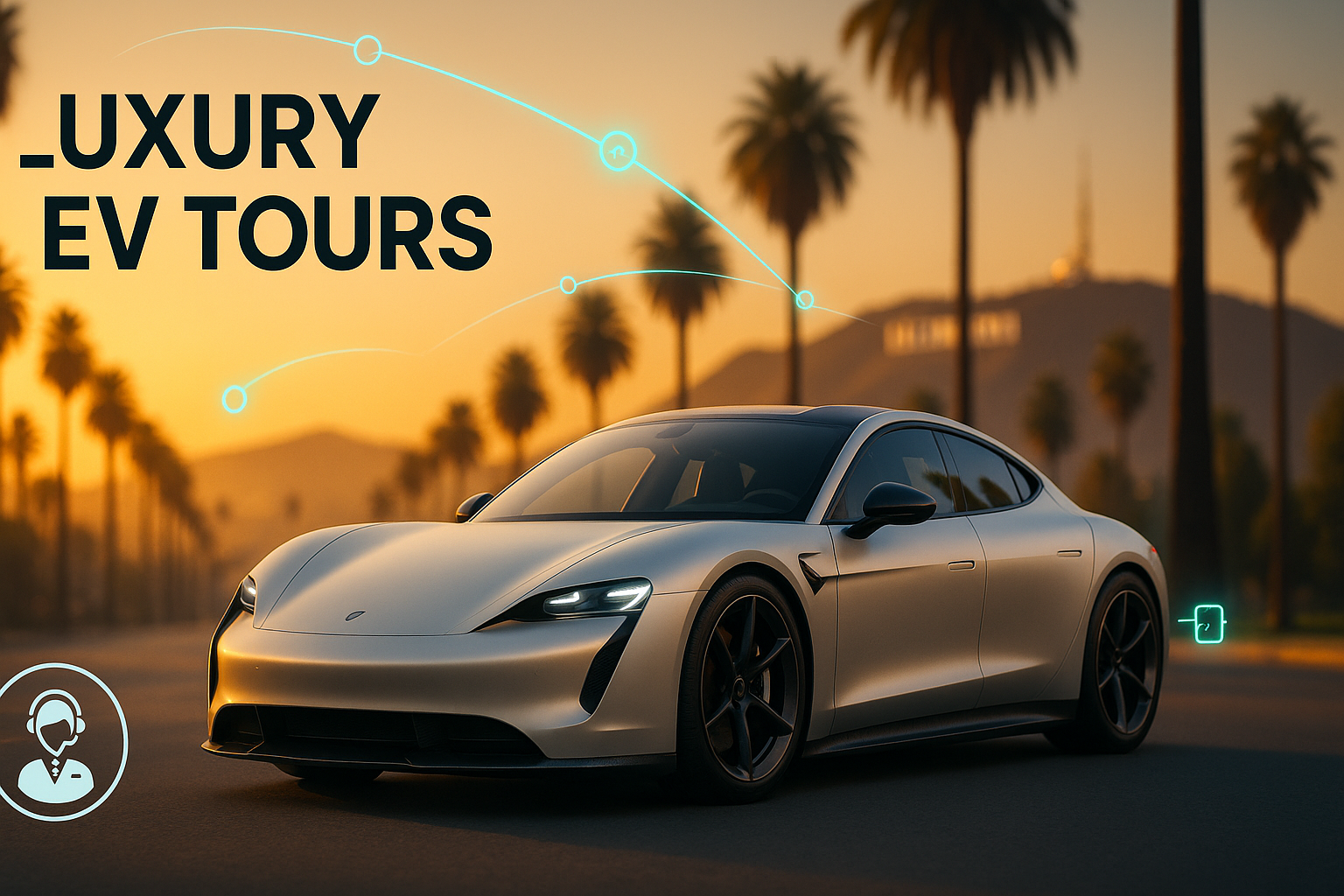
Electric & Autonomous Supercar Tours Los Angeles: The Future of Luxury Driving Experiences in Hollywood
BYG Writers•June 24, 2026•5 min read
Los Angeles has always sold a certain kind of driving fantasy: palm-lined boulevards, sunset views, and the sense that anything can happen between Beverly Hills and the Hollywood Hills. But expectations are changing fast. Travelers still want the photo-op and the adrenaline, yet they also want quieter, cleaner rides, better guidance, and experiences that feel curated rather than chaotic. That’s why supercar tours Los Angeles are trending again, especially as electric and semi-autonomous supercars enter the conversation. If you’re a founder, operator, or IT lead in experiences and hospitality, this shift matters: it affects vehicle choices, safety protocols, permits, pricing, and the tech stack behind the tour.
## Why supercar tours are changing right now
Interest in supercar experiences is not new, but what people consider “luxury” has evolved. A few forces are converging:
First, demand is visibly rising. LA operators are showing high booking intent and “likely to sell out” signals, which indicates consumers are actively shopping and comparing options, not casually browsing. The market is competitive, and the winners will be the ones who run a safer, more seamless operation while still delivering a cinematic moment.
Second, travelers increasingly expect AI-assisted planning and personalization. Recent travel reporting points to higher usage of AI in trip planning for 2026 travel patterns, including longer stays and experience-led itineraries. When a customer is already using AI to build an itinerary, they’ll also expect the tour to feel “smart”: the right pickup location, the right time of day for photos, and narration that fits their interests.
Third, sustainable luxury is becoming a real purchasing filter, not just a brand statement. Automakers are pushing hybrid and fully electric performance models, and enthusiast communities are openly discussing EV adoption, practicality, and ownership preferences. For tour operators, this changes fleet strategy, route planning, and even how you pitch the experience. Some guests want the roar of an ICE engine, but others want the instant torque and modern feel of an EV, without feeling like they’re doing something wasteful.
Finally, “autonomous” is entering the vocabulary, even if fully driverless supercar tours aren’t broadly legal or practical. Many premium vehicles now include advanced driver assistance systems (ADAS) that can be used in limited, supervised conditions. Guests are curious, but they need clarity on what’s allowed, what’s safe, and what’s real versus marketing.
If you run tours, concierge services, or a luxury travel platform, this is not a cosmetic trend. It affects liability, insurance, staff training, customer expectations, and the technology that supports routing, compliance, and guest experience.
## A practical breakdown: how to design an electric or semi-autonomous Hollywood supercar tour
This section is written for people who need to make operational decisions, not just talk about the idea.
### 1) Start with legality and safety, then design the experience around it
Electric supercars are straightforward from a legal standpoint: they’re vehicles, and your core obligations are licensing, insurance, vehicle condition, and safe operation. Semi-autonomous features are trickier because guests may assume “self-driving” means hands-off.
Set clear definitions in your policies and guest briefing:
- Electric (EV): propulsion type. No special autonomy implications.
- Hybrid: same tour considerations as ICE with added battery/regen behavior.
- ADAS (driver assistance): features like adaptive cruise control, lane centering, automatic emergency braking. These are not self-driving and typically require hands-on supervision.
- Autonomous: true self-driving. In most consumer tour contexts, treat this as “not offered” unless you have a specialized, permitted program.
Practical safeguards that reduce risk and disputes:
- Written pre-tour briefing that states which features will or will not be used.
- A “hands on, eyes on” policy if any assistance feature is enabled.
- A no-phone rule while driving (and how you’ll enforce it).
- A route risk assessment: traffic density, road quality, blind corners, construction patterns.
If you need a credible external reference point for road safety and driver assistance expectations, the U.S. National Highway Traffic Safety Administration (NHTSA) has guidance and consumer info on vehicle safety and ADAS: https://www.nhtsa.gov/technology-innovation/automated-vehicles-safety
### 2) Choose routes that match the powertrain and the photo goals
Route design for supercar tours Los Angeles is not just “what looks cool.” EVs and high-performance cars have different constraints and strengths.
For EV-focused routes, prioritize:
- Smooth road surfaces and predictable traffic flow (reduces range anxiety and motion discomfort).
- Fewer stop-and-go bottlenecks where guests feel like they paid to sit in traffic.
- Proximity to reliable charging, even if you don’t plan to charge mid-tour.
For Hollywood-focused, Instagram-friendly routing, consider building tiers:
- Classic Hollywood: Hollywood Sign viewpoints, Mulholland overlooks, Sunset Strip drive-by.
- Beverly Hills and luxury streets: Rodeo-adjacent loops, scenic residential corridors (within legal limits and respectful driving).
- Coastal add-on: Pacific Coast Highway segments, timed for golden hour.
Operational note: some “famous” photo spots are now crowded, policed, or sensitive. Build alternative viewpoints into your plan so your guide can pivot without losing the moment.
### 3) Build a comparison framework guests can understand
Guests don’t always know what they want until you explain the tradeoffs in plain language. A simple comparison also reduces refund requests.
Use a short decision guide:
- Sound and presence: ICE is louder and more theatrical; EV is quieter and more futuristic.
- Acceleration feel: EV torque can feel immediate; ICE can feel more dramatic through gear changes.
- Comfort: EVs can be smoother at low speeds; stiff track-focused cars can be harsh on rough LA roads.
- Environmental impact: EV avoids tailpipe emissions during the tour; hybrids reduce fuel use versus pure ICE, but still burn fuel.
- Attention: loud ICE attracts more attention; some guests want that, some don’t.
You can present this as part of your booking flow, not as a long blog page.
### 4) Treat “autonomous” as a guest education problem
Most complaints and safety incidents come from mismatched expectations. If a guest arrives believing they’ll “press a button and the car drives itself,” you’re setting up a bad day.
A better approach:
- Position the experience as “electric performance with modern driver assistance,” not autonomous.
- Explain what features do (lane keeping, adaptive cruise) and where they will not be used (dense urban areas, complex merges, scenic mountain roads).
- If you offer a demonstration, keep it short, supervised, and in a low-risk segment.
### 5) Add tech that improves the tour, not tech for its own sake
If you want the tour to feel premium, technology should reduce friction and increase context.
High-value, low-hype upgrades:
- AI-guided narration that adapts: film history for movie buffs, engineering notes for car enthusiasts, architecture for design travelers.
- AR overlays for passengers (not drivers): identify landmarks, show “then vs now” scenes, or explain a supercar’s drivetrain visually.
- Smart photo planning: timed stops and recommended camera angles that account for sun position.
- Multi-language support: essential for international travelers.
A simple rule: if a feature distracts the driver or increases cognitive load, it doesn’t belong in the car.
### 6) Pricing and packaging: sell certainty and curation
Luxury guests pay for fewer surprises. With luxury supercar tours Los Angeles, pricing often fails when it’s opaque or when add-ons feel like gotchas.
Packaging ideas that align with EV and semi-autonomous trends:
- “Electric performance” tier: a curated EV/hybrid fleet, quieter ride, modern cockpit walkthrough.
- “Hollywood golden hour” tier: tighter schedule, guaranteed photo stops, sunset timing.
- “Private concierge” tier: fewer vehicles, more support, flexible pickup, custom route.
Be explicit about what’s included:
- Insurance coverage basics (in plain English)
- Deposit and cancellation terms
- Minimum age and licensing rules
- Whether guests drive or ride as passengers
### 7) Trust signals you should publish (and keep updated)
Trust is a conversion factor, especially for high-ticket, high-liability experiences.
Publish a simple “safety and compliance” page and keep it current:
- Driver requirements (license, age, driving record criteria if applicable)
- Vehicle maintenance cadence
- Commercial insurance and coverage highlights
- Guide training and certifications
n- Permits and filming/photo policies if you offer professional shoots
- Sustainability posture (EV charging sourcing if you have it, or what you can honestly verify)
If you can’t verify it, don’t claim it.
## Tools, platforms, and use cases for running smarter tours
Running electric-forward supercar tours Los Angeles adds operational complexity: charging logistics, real-time rerouting, guest communication, and consistent briefing. This is where a focused toolset matters.
### Guest experience automation and AI itinerary support
If your customers already plan with AI, your operation should plug into that expectation.
Use cases where BYG TOURS AI fits naturally:
- Dynamic itinerary building: propose the best route and time window based on traffic patterns, guest interests, and desired photo style.
- Smart messaging: send pre-tour briefings, meeting points, and “what to bring” checklists automatically, in the guest’s language.
- FAQ handling: answer common questions about legality, safety, and what “semi-autonomous” actually means, consistently.
- On-tour narration support: deliver location-aware storytelling without forcing guides to memorize scripts.
If you want to see how BYG TOURS AI approaches LA experiences more broadly, you can reference related content and local guidance on https://WelcometoLA.app.
### Operations stack: what to standardize
You don’t need an enterprise platform to get control, but you do need consistency.
Core components to standardize:
- Booking and identity verification: reduce last-minute surprises around license eligibility.
- Fleet status tracking: maintenance, tire condition, charging state (for EVs), and cleaning readiness.
- Route templates: approved routes with optional branches for traffic, closures, or guest preferences.
- Incident and waiver workflow: digital waivers, time-stamped briefings, post-tour issue logging.
### EV-specific considerations (practical, not theoretical)
EV tours live or die on predictability.
What to operationalize:
- Charging plan: even if tours are short, establish a default “top up” window and a backup station list.
- Battery health and range buffer: define a minimum state-of-charge threshold before a vehicle can be assigned.
- Cabin comfort: EV HVAC usage affects range; plan durations accordingly.
### Content and photo workflows that guests actually use
Guests want proof they did the thing. Make that easy without creating safety problems.
Better options than “take your phone out while driving”:
- Pre-defined pull-offs and scenic stops.
- A short “photo protocol”: where to stand, how long you have, and what not to do.
- Optional add-on: a dedicated photographer at stops only (no hanging out of moving cars).
### Training and quality control
Luxury supercar tours Los Angeles fail when quality varies by guide.
Standardize:
- A 10-minute pre-drive script: safety, expectations, route highlights, and what features will be used.
- A checklist for each vehicle: tires, brakes, warning lights, cleanliness, charging state.
- A debrief protocol: record what worked, what didn’t, and what guests asked.
This data is where AI support becomes valuable. If you capture structured feedback, BYG TOURS AI can help spot patterns (for example, specific overlooks that are consistently crowded at certain times) and adjust routing recommendations.
## Conclusion and next steps
Electric and semi-autonomous features are reshaping what guests expect from supercar tours Los Angeles, especially in Hollywood where the experience is equal parts driving and storytelling. The operators and teams that win will be the ones who treat this as a systems problem: clear legal positioning, disciplined safety protocols, routes designed for both performance and photos, and tech that reduces friction for guests.
If you’re evaluating an EV or hybrid fleet, start by tightening your briefing and compliance page, then build route tiers that reflect real tradeoffs between sound, comfort, attention, and sustainability. If you’re planning to mention autonomy at all, be precise and conservative, and demonstrate only what you can supervise safely.
If you’re exploring this for your team, BYG TOURS AI can help you automate guest communication, personalize narration, and standardize route planning without turning the experience into a tech demo. Need help connecting your systems or designing a safe, modern tour workflow? Book a free consult.
Ready to explore LA?
Book one of our premium tours and experience the city like never before
Explore Tours