Back to Blog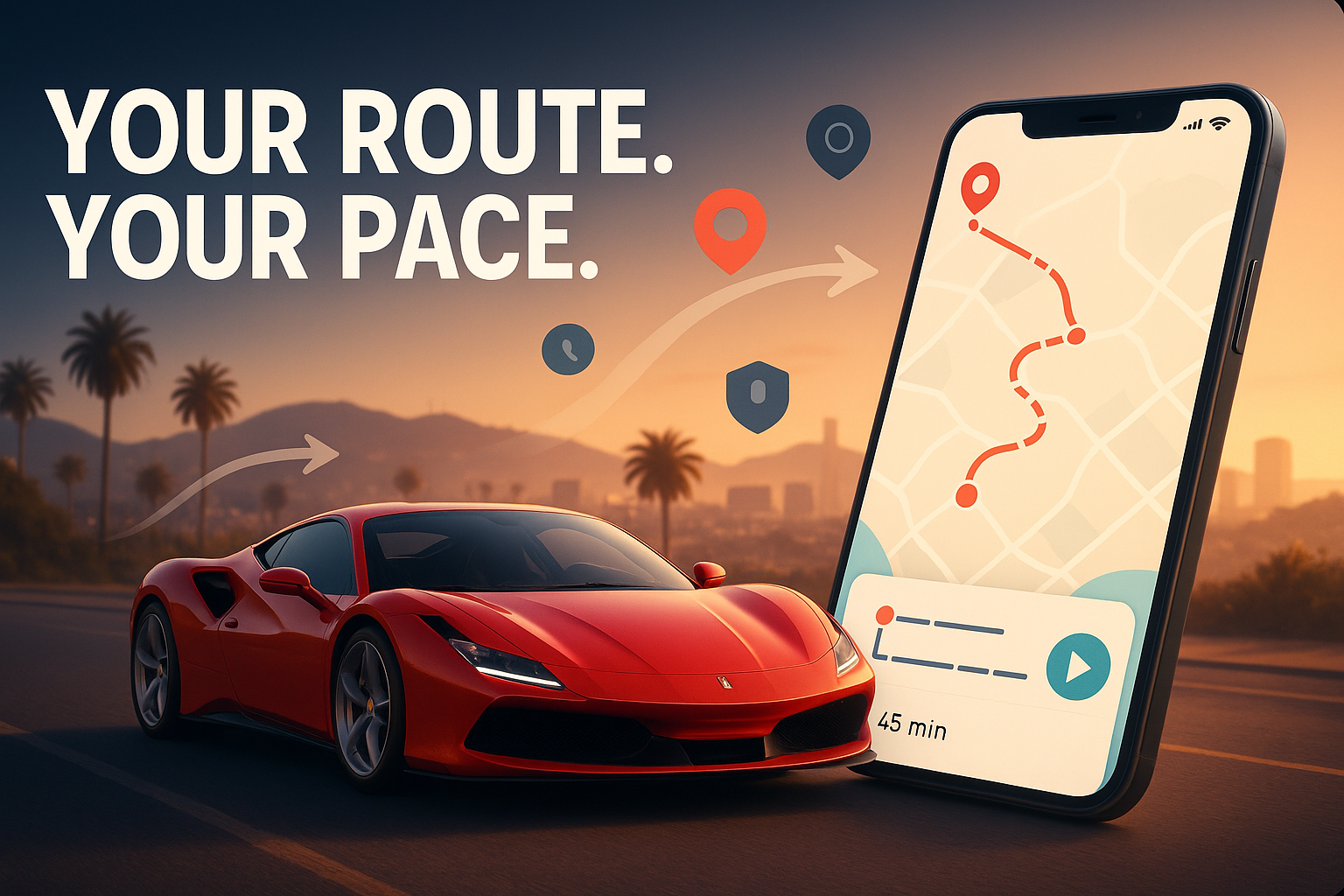
The Rise of Self-Guided & Autonomous Supercar Driving Experience Los Angeles Tours
BYG Writers•June 26, 2026•5 min read
Self-guided travel has been creeping up on the tour industry for years, but in 2026 it’s hard to ignore: travelers want control. In Los Angeles, that shift is showing up in a very specific way: the self-guided supercar driving experience Los Angeles visitors used to book as a tightly managed “follow-the-leader” outing is becoming more autonomous, more personalized, and more tech-supported. People still want the drama of a Ferrari or Lamborghini. They just don’t want a rigid schedule, a big group, or an itinerary that feels like a conveyor belt. They want to see Hollywood’s icons and LA’s best roads on their own terms, with an app or concierge quietly handling the details.
## Why this topic matters right now
LA is the perfect testbed for autonomous, self-paced luxury experiences. The city is built for driving, it’s spread out, and it’s packed with “I saw that on screen” landmarks. But traditional guided tours are often mismatched to how modern luxury travelers actually move.
Here’s what’s changing, and why it matters to travelers and operators:
- **Luxury travelers are prioritizing personalization over packaging.** Luxury travel trends for 2026 point toward experience-led journeys, self-guided road trips, and tech-enabled exploration rather than fixed itineraries and group formats. That’s not just a preference shift; it changes what people will pay for and recommend. (Source: https://www.koursair.com/news-insights/10-travel-trends-shaping-luxury-travel-in-2026?utm_source=openai)
- **Autonomy reduces friction and increases satisfaction.** When guests can choose their pace, stops, and photo moments, the experience feels “owned” rather than “delivered.” That typically translates into better reviews and fewer complaints about timing.
- **LA’s traffic and parking punish rigid schedules.** Anyone who has tried to hit three neighborhoods in two hours knows the truth: LA doesn’t cooperate. A self-guided approach can flex around real-time conditions without making the guest feel like they “missed” part of the tour.
- **Trust and safety expectations are higher.** Guests want the thrill, but they also want clear rules, support, and guardrails. A great autonomous model doesn’t mean “no structure.” It means structure that stays mostly invisible until you need it.
- **For founders and IT leads, this is an operational shift.** Self-guided and autonomous tours require strong routing, messaging, identity verification, and incident response workflows. When it’s done right, you can scale without adding a guide for every additional car.
In short: the rise of the self-guided supercar driving experience Los Angeles tourists are seeking is not a fad. It’s the natural outcome of personalization, mobile-first expectations, and travelers who are used to controlling everything from dinner reservations to navigation.
## How self-guided supercar tours work (and what makes them “autonomous”)
A self-guided tour can sound simple: rent a car, follow a map, done. In practice, the experiences people pay for in LA succeed because they combine freedom with a curated backbone.
Below is a practical breakdown of what matters, whether you’re a traveler planning your day or an operator designing the experience.
### 1) Start with the right vehicle model: “drive,” “ride,” or “hybrid”
Not everyone wants the same thing from a supercar day. The best experiences make this explicit up front.
- **Drive-it-yourself:** The guest is the driver. This is the classic supercar driving experience Los Angeles visitors dream about, but it requires tighter eligibility checks and clearer expectations.
- **Ride-along with a co-pilot:** Great for people who want the sound and feel without the stress of navigating or managing an unfamiliar car.
- **Hybrid:** Guests can switch drivers at designated stops or pair one driver with one passenger. This is often the sweet spot for couples.
If you’re deciding between options, ask yourself: do you want maximum adrenaline or maximum sightseeing? You can have both, but one usually leads.
### 2) Build a route that matches LA reality (not just Instagram)
A great self-guided tour route is designed around traffic patterns, road quality, and “stop-ability,” not just famous names. For example:
- **Iconic viewpoints:** Hollywood Sign overlooks, Mulholland pull-offs, Griffith-area vantage points (timing matters).
- **Scenic performance roads:** Sections where the car feels alive without forcing aggressive driving.
- **Photo-friendly landmarks:** Places where you can safely park or pull over without turning the day into a parking battle.
The goal is not to cram in everything. It’s to curate a route where every segment earns its time.
### 3) Make autonomy safe with clear guardrails
Autonomous doesn’t mean unmanaged. Travelers want freedom, but they also want to know someone has thought through the “what ifs.” The best operators typically provide:
- **A pre-drive briefing that’s actually useful** (controls, braking feel, visibility, low-clearance warnings, where not to park).
- **Written rules that are easy to understand** (fuel/charging expectations, tolls, mileage, curfews, prohibited roads).
- **Support channels** (in-app chat or a phone number that’s answered quickly).
If you’re a traveler, don’t skip the briefing. If you’re building the experience, don’t bury the rules in legalese. Clarity prevents incidents.
### 4) Use tech to replace the “tour guide voice” without losing the story
The big win in self-guided tours is letting guests move at their own pace. The big risk is that the day becomes a random drive with no context. Tech solves that if it’s done thoughtfully.
Look for (or provide):
- **Turn-by-turn navigation linked to the itinerary** so the guest isn’t juggling multiple apps.
- **Geo-triggered audio narration** that starts when you reach a spot, not when a schedule says you should.
- **Optional themes** like filming locations, celebrity history, architecture, or coastal viewpoints.
This is where BYG TOURS AI fits naturally: using app-based narration and route support to give guests autonomy while still delivering a coherent, curated LA story. If you want an example of how self-guided experiences are packaged, you can also explore the broader LA experience content on https://WelcometoLA.app.
### 5) Design the day around “moments,” not minutes
Traditional tours run on a stopwatch. Self-guided tours should run on moments.
A practical way to think about it:
- **Start moment:** the handoff, first ignition, first few miles to get comfortable.
- **Signature moment:** a scenic road section where the car and environment click.
- **Landmark moment:** a stop with a view, a photo, a short story.
- **Reset moment:** a coffee stop or quick snack where you breathe and check the next leg.
- **Finale moment:** a last scenic stretch, a clean return flow, and a “what’s next” suggestion.
When the itinerary is built around moments, guests feel free without feeling lost.
### 6) If you “rent a supercar Los Angeles” style, plan for the hidden constraints
Many people start by searching rent a supercar Los Angeles and assume it’s equivalent to a tour. It’s not, and that gap can make or break the day.
If you’re renting independently (or evaluating a tour that looks like a rental), confirm:
- **Insurance and deposits:** what’s covered, what’s excluded, and what the deductible actually means.
- **Mileage policies:** per-day caps, overage fees, and whether scenic routes fit inside them.
- **Delivery and pickup logistics:** where the car is delivered, what happens if traffic delays you.
- **Charging plan for EV performance cars:** where you’ll charge and how long it will take.
A well-designed supercar driving experience Los Angeles package typically bakes these into a guided setup, even if the driving itself is self-directed.
### 7) Choose stops that support authenticity, not just celebrity clichés
LA’s celebrity ecosystem can feel staged if you only hit the obvious spots. Travelers increasingly want authenticity: neighborhoods with real character, viewpoints locals actually use, and stories that aren’t just gossip.
Examples of authenticity-friendly choices:
- Overlooks and hillside roads where the city’s scale makes sense.
- Film-location context that explains “why this place gets used on camera.”
- Architecture and design points that connect to LA’s creative industries.
This doesn’t eliminate celebrity landmarks. It just frames them in a way that feels grounded.
### 8) Build in contingency: traffic, heat, crowds, and attention
Supercars attract attention. That’s part of the fun, but it also creates practical constraints.
A smart plan includes:
- **Alternate stops** in case a viewpoint is packed or parking is impossible.
- **A heat plan** (water, short breaks, and awareness of how heat affects comfort and EV range).
- **A “low attention” break** where you can step away from crowds if you want.
For operators, these contingencies should be embedded in the route logic and support scripts. For travelers, they should be part of your expectations. LA is dynamic; your tour should be too.
## Tools, platforms, and real use cases
Self-guided and autonomous tours work when tech reduces cognitive load. The guest should feel present, not like a logistics manager.
### BYG TOURS AI for app-led self-guided supercar routes
For a self-guided supercar driving experience Los Angeles visitors can trust, you want three layers: curated routing, narration, and support.
BYG TOURS AI is useful in this model because it can:
- **Deliver curated routes** designed around LA landmarks and drivable segments.
- **Provide audio guidance and context** so the day feels like a story, not a checklist.
- **Support flexible pacing** by triggering information based on location rather than a rigid timetable.
This approach aligns with the broader shift toward tech-enabled, autonomous touring without forcing guests into a big-group format.
### Navigation and mapping (what “good” looks like)
Even if you’re using mainstream mapping tools, the standard for a premium experience is higher than “here’s a Google Map link.”
A strong setup typically includes:
- A primary route plus alternates.
- Saved stops with clear parking or pull-off guidance.
- Notes about timing (sunset viewpoints, crowd peaks).
### Operations stack for tour operators (if you’re building this)
If you run tours or rentals and you’re moving toward self-guided autonomy, your internal tooling matters as much as the guest-facing app.
Common building blocks:
- **Identity verification and eligibility checks** (license validation, age thresholds, deposit workflows).
- **Digital waivers and briefings** that log completion.
- **Vehicle telematics** for location awareness, maintenance signals, and incident response.
- **Customer support workflows** with clear escalation paths.
The goal isn’t surveillance. It’s safety, service recovery, and predictable operations.
### Concrete use cases travelers actually care about
A few scenarios where self-guided supercar touring is especially strong:
- **Couples who want a “shared mission” day:** One drives, one navigates, both choose stops. It feels personal.
- **Repeat visitors who are bored of bus tours:** They already “did Hollywood.” Now they want the roads, the views, and the freedom.
- **Creators who need flexible photo timing:** Golden hour waits don’t fit group schedules.
- **Small groups splitting into multiple cars:** Everyone gets the thrill, but you can still converge at landmarks.
And if you’re comparing options: a structured, self-guided tour is often a better fit than a basic rent a supercar Los Angeles rental when you want a cohesive route, curated stops, and a support layer.
## Conclusion and CTA
The rise of the self-guided supercar driving experience Los Angeles travelers are booking is really about one thing: control without chaos. People want the sound, acceleration, and presence of a supercar, plus the freedom to explore Hollywood viewpoints, iconic streets, and hidden pull-offs at their own pace. At the same time, they expect modern tech support, clear safety guardrails, and logistics that don’t turn the day into work.
If you’re planning a trip, prioritize a route designed for LA reality, not just famous names, and choose an experience that includes navigation, storytelling, and support. If you operate tours, the opportunity is to productize autonomy: build repeatable routes, layer in app-based narration, and create a service model that scales without losing quality.
If you’re exploring this for your team, BYG TOURS AI can help. Want to automate the routing, narration, and guest support layer for self-guided tours? Book a free consult.
Ready to explore LA?
Book one of our premium tours and experience the city like never before
Explore Tours