Back to Blog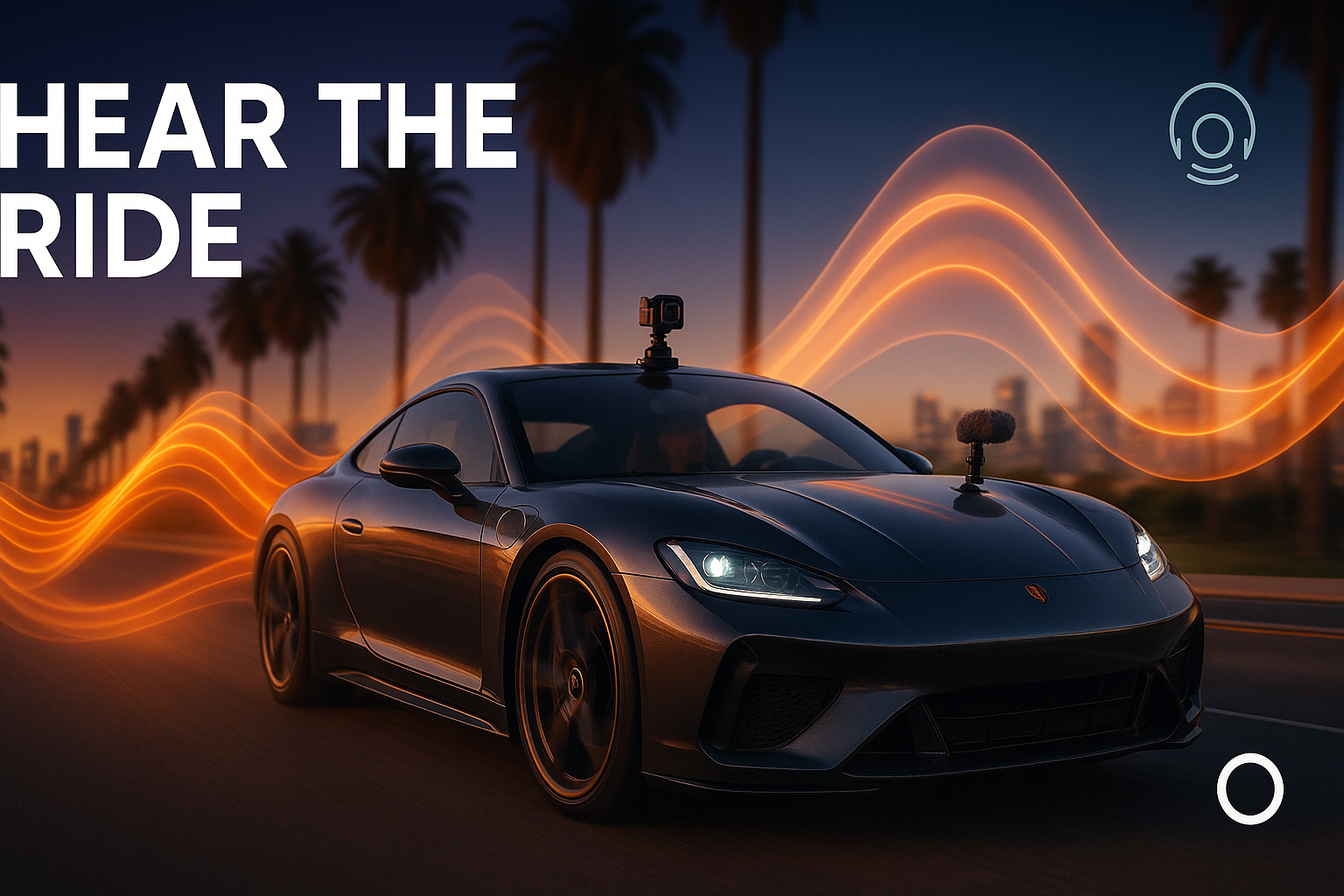
Supercar Tour Los Angeles: How Real-Time Engine Sound and Immersive Audio Are Redefining the Experience
BYG Writers•June 26, 2026•5 min read
You can book the same route twice in Los Angeles and have two completely different supercar experiences. Traffic patterns change, the light shifts, the crowd reacts, and most importantly, the sound changes. In 2026, that last part is becoming the differentiator. A supercar tour los angeles used to be about looks and horsepower specs. Now it’s increasingly about sensory authenticity: hearing the engine the way it was meant to be heard, capturing it cleanly, and reliving it in formats that match how people actually share experiences today.
That shift matters because sound is where many tours quietly fall short. Exhaust regulations, route constraints, cabin insulation, and bad recording setups can leave guests thinking, “This is cool… but why doesn’t it sound like it should?” Real-time engine sound modeling, better in-car acoustics, and immersive recording formats are changing that expectation.
## Why real-time sound and immersive audio matter on a supercar tour
Supercars are emotional machines, and a lot of that emotion comes from sound. The pitch climb of an acceleration run, the crackle on overrun, the subtle mechanical textures at idle. When that’s missing or muddied, the experience feels flatter than the price tag suggests.
Three things are converging right now:
- **Manufacturers are investing heavily in interior acoustics.** Bugatti, for example, has explored piezoelectric speaker technology that uses parts of the car’s body as sound radiators, effectively turning the vehicle into a high-end audio system. That’s not “added noise,” it’s a serious attempt at controlled, immersive cabin sound. (Source: https://www.t3.com/tech/audio/bugattis-2026-supercar-is-a-gbp3-2m-state-of-the-art-sound-system)
- **Engine sound is increasingly computable.** Research into computational engine sound modeling and real-time resynthesis is accelerating, enabling new ways to capture, reproduce, and even augment engine audio in interactive media. This is relevant for tours because it affects what guests can record and how they can relive it. (Source: https://arxiv.org/abs/2603.07584)
- **Los Angeles is unusually open to “future transport” experiences.** Public support for autonomous passenger vehicles in L.A. has risen significantly, signaling that many travelers are willing to try high-tech mobility concepts, not just traditional luxury. (Source: https://bizfedlacounty.org/press-release/survey-shows-35-point-increase-in-support-for-autonomous-vehicles-in-l-a/)
Put those together and you get a clear trend: guests want a supercar tour los angeles that sounds real, records well, and offers optional tech layers (spatial audio, POV capture, AR overlays) without turning the drive into a gimmick.
There’s also a practical business angle. Tours compete on similar cars and similar photo stops. Audio, capture quality, and “replay value” are newer levers. When a guest leaves with a clean 20-second clip that actually conveys the car’s character, your tour earns organic shares in a way that a generic roadside photo rarely does.
## Practical breakdown: how tours can deliver authentic engine sound and immersive audio
The goal is simple to say and hard to execute: deliver an authentic sound experience in real time, then help the guest take it home. Here’s how to think about it in a way that’s grounded and operational.
### 1) Set expectations early: what “authentic sound” can and can’t mean
A common frustration is the mismatch between online clips and what you hear in a real cabin on city streets.
Be explicit about variables that affect engine sound during supercar tours los angeles california:
- **Routes and speeds:** Canyon runs and highway pulls sound different than stop-and-go along Sunset.
- **Cabin vs exterior sound:** A mid-engine car behind you will sound different in-cabin than a front-engine car.
- **Exhaust configuration:** Some cars have active valves; some may be set to a quieter mode depending on location/time.
- **Traffic and wind noise:** Convertibles can be incredible for sensation, but they complicate clean audio.
Practical tactic: include a short “sound expectations” note in your confirmation message. It reduces disappointment and positions you as a straight shooter.
### 2) Choose routes that support sound, not just scenery
If sound is a priority, route design changes.
A good sound-forward route mixes:
- **Low-speed texture zones:** Places where you can hear idle, low-RPM burble, and throttle tip-in.
- **A controlled acceleration segment:** A safe, legal stretch where a brief pull is possible without drama.
- **A quieter background environment:** Less construction, fewer echoing trucks, fewer constant sirens.
In Los Angeles, that often means balancing iconic areas (where guests want photos) with a short segment that’s optimized for listening.
### 3) Use in-car audio capture that doesn’t lie
Most guests will film on a phone. Phones are fine for video, but they’re inconsistent for audio, especially with loud transients.
If you operate tours, consider offering an “audio-ready” capture setup option:
- **Dual-mic approach:** One mic aimed at the cabin sound (driver/passenger perspective), one aimed toward the rear or intake/exhaust path (where safe and permitted).
- **Levels and headroom:** Supercars clip microphones easily. A clean recording at -12 dB is better than a distorted “louder” clip.
- **Wind management:** A small windscreen makes a bigger difference than most people expect.
- **Time-sync for edits:** If you record on a separate device, a quick clap at the start helps sync audio to video later.
For guests, provide a one-page guide: “How to record your supercar tour los angeles like it actually sounded.” That single asset reduces support questions and improves shareability.
### 4) Introduce immersive audio without turning it into fake sound
“Immersive” should not mean “added engine noise.” It should mean better spatial realism.
Examples that respect authenticity:
- **Spatial audio mixes of real recordings:** If you capture with multiple microphones, you can build a spatial mix that preserves real engine character.
- **Binaural capture for headphones:** A head-worn mic can recreate the “I was there” effect for reliving the drive.
- **POV + spatial audio packages:** Short, edited clips formatted for Reels/TikTok with clean sound and minimal processing.
What to avoid:
- Heavy compression that makes everything the same loudness.
- Artificial pops/bangs added in post.
- Generic “supercar sound” overlays.
Enthusiasts can tell. Luxury travelers may not identify the technical reason, but they still feel when it’s not real.
### 5) Consider real-time augmentation as an optional layer (AR/VR and playback)
Not every guest wants tech. Some just want to drive. The trick is to offer optional layers.
A sensible menu approach:
- **Base tour:** The real drive, real sound, guided route.
- **Capture add-on:** POV mount + clean audio kit + delivered clips.
- **Immersive playback add-on:** A spatial audio version for headphone listening, plus a short highlight reel.
- **VR/AR preview or recap:** A short “pre-ride” walkaround or “post-ride” recap where sound is presented in a controlled way.
Here’s where the advances in real-time modeling and resynthesis become relevant: they enable interactive playback and educational overlays (for example, highlighting where the sound is coming from in the drivetrain), without needing to fabricate the engine note.
### 6) Build the experience around moments, not minutes
People remember moments: the first startup, the first downshift, the first tunnel pass, the canyon turn-in.
Design your tour flow to create a few intentional audio moments:
- **Startup briefing:** A quiet spot where the guest can hear the ignition and idle clearly.
- **A “listen segment”:** Two minutes of focused driving with minimal talking, so the guest can soak it in.
- **A safe “downshift moment”:** If your route allows, a controlled deceleration/downshift sequence that guests love.
- **A recap stop:** Where you can play back a 10-second clip immediately so they know they captured it well.
This approach works for both enthusiasts and first-timers. And it makes supercar tours los angeles california feel curated rather than improvised.
### 7) Align with the futuristic mobility trend without losing the human side
The rising interest in autonomous and next-gen transport in Los Angeles doesn’t mean people want a sterile experience. It means they’re curious about the future.
You can meet that curiosity by:
- Explaining how active exhaust valves work.
- Demonstrating how cabin acoustics are engineered.
- Comparing naturally aspirated vs turbocharged sound characteristics.
- Offering a short segment on how real-time audio modeling is used in simulation, training, or media.
Done well, this feels like a mini masterclass, not a lecture.
## Tools, platforms, and use cases that make this practical
The gap between “cool idea” and “repeatable tour offering” is usually workflow: booking, route coordination, capture delivery, and customer communication. A few tool categories make the audio-forward approach realistic.
### Capture and editing workflows (for shareable, honest audio)
- **POV camera workflows:** Action cameras with reliable mounting and manual audio controls help avoid clipping. Even if you still use phone video, a separate audio recorder can dramatically improve realism.
- **Basic audio cleanup (not heavy processing):** Light noise reduction and EQ can remove wind rumble without changing the engine’s character.
- **Templates for short-form content:** Pre-built caption and cut templates for Reels/TikTok save time and keep output consistent.
Use case: deliver a guest a 15-second startup clip, a 15-second acceleration clip, and a 10-second “moment” clip, each formatted vertically with clean audio.
### Spatial and immersive playback
- **Binaural/spatial audio rendering:** For guests who want to relive the drive on headphones, spatial rendering can recreate the cabin perspective convincingly if the source capture is good.
- **VR recap clips:** Short 180/360 snippets can be compelling for certain routes and cars, especially when paired with accurate audio.
Use case: a “sound postcard” package that a guest can replay on a flight home.
### Automation and coordination (where BYG TOURS AI fits naturally)
A strong audio experience requires tight coordination: pre-tour expectation setting, equipment checklists, route notes, and post-tour delivery. This is where automation helps without feeling robotic.
BYG TOURS AI can support tour operators by:
- **Automating pre-tour communication:** Send a concise “what to expect for sound and recording” message, tailored to the car and route.
- **Running checklists:** Ensure the right mounts, windscreens, and settings are confirmed before departure.
- **Coordinating deliverables:** Trigger a post-tour workflow that reminds staff to deliver clips, collect feedback, and log which routes produced the best audio results.
If you’re building a broader L.A. visitor experience stack, you can also connect this tour content to other planning tools on https://WelcometoLA.app (internal link), so guests can stitch the drive into a full itinerary.
### External references that help educate guests
When you explain why newer cars can sound different in-cabin, it helps to point to credible reporting on modern acoustics and sound system integration in high-end vehicles, like the Bugatti piece referenced earlier: https://www.t3.com/tech/audio/bugattis-2026-supercar-is-a-gbp3-2m-state-of-the-art-sound-system
This kind of link strengthens your credibility and sets realistic expectations.
## Conclusion and CTA
A supercar tour los angeles experience is no longer judged only by the badge on the steering wheel or the view from the overlook. Guests increasingly evaluate whether it felt real in the moment and whether they can relive it later. Real-time engine sound awareness, clean capture workflows, and optional immersive playback are practical ways to deliver that authenticity without resorting to fake audio tricks.
If you operate supercar tours los angeles california, start with the fundamentals: set expectations, design one sound-forward route segment, and standardize a basic recording kit that doesn’t clip. Then layer in immersive formats only where they preserve the real character of the car.
If you’re exploring this for your team, BYG TOURS AI can help you automate the communications, checklists, and content delivery that make an audio-first tour repeatable. Need help connecting your systems or mapping a workflow from booking to post-tour clips? Let’s talk. Want to automate this process? Book a free consult.
Ready to explore LA?
Book one of our premium tours and experience the city like never before
Explore Tours